
Category : AI for Ecommerce | Reading time: ~10 min
Introduction
Fashion ecommerce is evolving fast. An AI sales assistant for ecommerce is no longer a luxury — it is a competitive necessity for brands that want to grow.
Shoppers today expect more than a product catalog. They want advice, personalization, and speed. Traditional ecommerce cannot deliver all three at scale. This is where conversational AI steps in, transforming static storefronts into dynamic, intelligent sales environments.
What Is an AI Sales Assistant for Ecommerce?
An AI sales assistant is a software layer that interacts with shoppers in real time. It understands intent, recommends products, and guides decisions. Unlike a basic chatbot, it uses machine learning and natural language processing to hold meaningful, context-aware conversations.
In fashion specifically, this means the assistant can understand style preferences, body types, occasions, and budget. It moves the shopper from browse to buy, faster, with higher confidence.
Shoppers guided by AI are 3× more likely to complete a purchase than those browsing without assistance”
Real Use Cases in Fashion Ecommerce
Let’s explore concrete scenarios where an AI sales assistant for ecommerce creates measurable business value in fashion retail.
Use Case 01
Guided outfit building. The assistant asks a few questions, occasion, style, budget and builds a complete outfit recommendation. It reduces decision fatigue and increases average order value through cross-selling.
Use Case 02
Size and fit advisory. Using body measurement data or previous purchase history, the AI recommends the right size. This dramatically reduces return rates, one of fashion ecommerce’s biggest cost drivers.
Use Case 03
Guided customization for made-to-order items. For brands offering personalized or bespoke products, guided customization flows let shoppers co-design items step by step. The AI assistant becomes a virtual atelier — patient, knowledgeable, and always on.
Use Case 04
Post-purchase upselling. After a sale, the AI recommends complementary accessories or care products. It turns a one-time buyer into a repeat customer through smart, timely suggestions.
Use Case 05
Inventory-aware recommendations. The assistant only surfaces what is actually available in the right size and color. It avoids the frustration of falling in love with an out-of-stock item.
Conversational AI: The Engine Behind the Experience
Conversational AI is what makes these use cases feel natural rather than robotic. The technology enables back-and-forth dialogue — the assistant can ask follow-up questions, handle objections, and adapt its tone.
For fashion brands, this is especially powerful. Style is personal and emotional. A conversational AI can mirror that emotional intelligence, creating a shopping experience closer to working with a personal stylist than filling a digital cart.
Platforms like Tailoor’s AI-powered solutions are built precisely for this context, combining product intelligence with conversational flows designed for fashion and luxury retail.
Guided Customization: A Game Changer for Made-to-Order Fashion
One of the most impactful applications is guided customization. Shoppers who can personalize a product, choose fabric, color, fit, details, are significantly more engaged and more likely to convert. They also return less.
However, customization can overwhelm without proper guidance. An AI sales assistant solves this by breaking complexity into simple, engaging steps. It asks the right questions and surfaces the right options at the right moment.
Tailoor’s AI-powered 3D configurator takes this further, letting shoppers visualize their custom product in real time while the AI guides each decision. The result is a confident buyer and a higher-margin sale.
KPIs That Matter: Measuring AI Impact
Implementing an AI sales assistant for ecommerce is an investment. Here are the key performance indicators that fashion brands track to measure ROI:
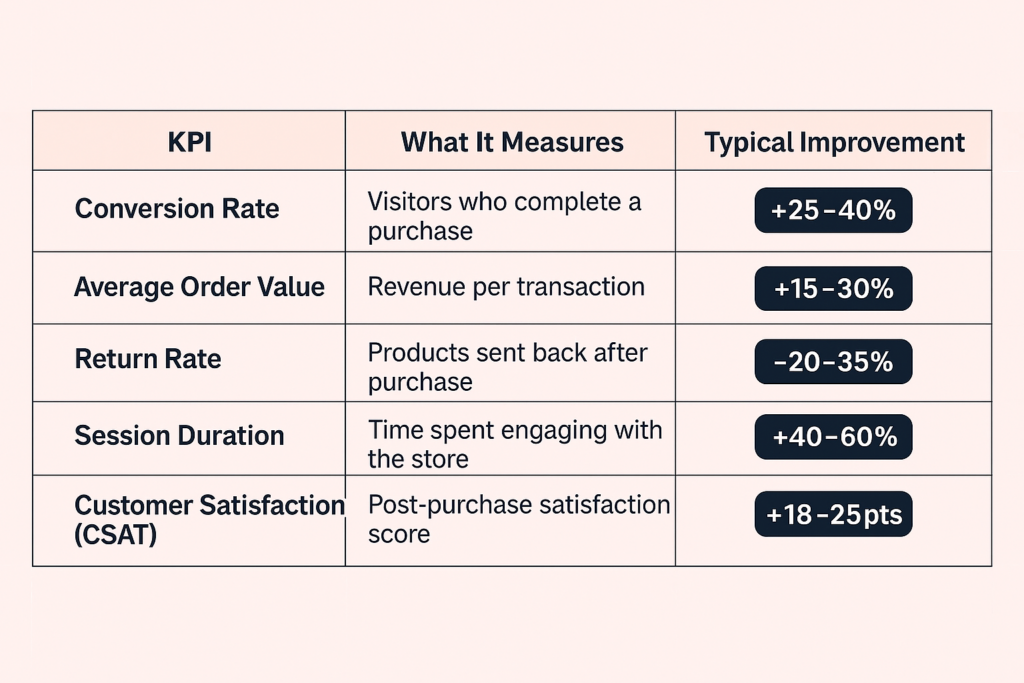
These numbers are not theoretical. Brands using conversational AI in fashion ecommerce report consistent gains across all five metrics within the first six months of deployment.
Why Fashion Brands Cannot Wait
Consumer expectations are rising faster than most ecommerce teams can respond. Shoppers have already experienced AI-assisted discovery on major platforms. They now expect it everywhere.
Brands that deploy an AI sales assistant for ecommerce now gain a compounding advantage. The assistant learns from every interaction. Its recommendations improve. Its conversions climb. The gap between early adopters and laggards widens every month.
Guided customization in particular offers a differentiation that is hard to copy. It is not just a feature,it is a new category of customer experience that builds brand loyalty and commands premium pricing.
Explore Tailoor Tailoor AI Solutions for Fashion EcommerceAI-Powered 3D Configurator
Conclusion
The AI sales assistant for ecommerce is reshaping fashion retail. From size advisory to guided customization, from outfit building to post-purchase upselling, the technology delivers real results across every key metric.
The question is no longer whether to adopt conversational AI, it is how quickly you can implement it before your competitors do. Fashion is about emotion, identity, and experience. The AI assistant that understands this will define the next decade of ecommerce.
Now is the time to act.
Ready to Transform Your Ecommerce?
Discover how Tailoor’s AI sales assistant can increase your conversions, reduce returns, and deliver truly personalized shopping experiences .