
How fashion brands sell custom products online without inventory
published on
Zero inventory, maximum personalization: the new retail model
The fashion industry is experiencing a seismic shift. Modern consumers demand personalized products, yet traditional retail models require brands to maintain massive inventories that tie up capital, create waste, and limit creative flexibility. This paradox has left many fashion entrepreneurs wondering: how can you sell custom products online without inventory?
The answer lies in a revolutionary approach that’s transforming how fashion brands operate. By leveraging made-to-order production models, advanced digital tools, and streamlined custom workflows, forward-thinking brands are breaking free from inventory constraints while delivering personalized experiences that today’s consumers crave.
The inventory problem: why traditional models are failing fashion brands
For decades, fashion brands have operated on a simple premise: design collections, manufacture in bulk, store inventory, and hope customers buy what you’ve made. This model worked when consumer expectations were lower and mass production was the only economically viable option.
Today, this approach is crumbling under the weight of its own inefficiencies.
The hidden costs of holding inventory
Maintaining inventory is extraordinarily expensive. Brands must invest capital months before seeing any returns, paying for raw materials, production, warehousing, and logistics before a single item sells. Studies show that holding costs typically represent 20-30% of inventory value annually, eating into already-thin profit margins.
Worse still, fashion inventory depreciates rapidly. Trends shift, seasons change, and yesterday’s must-have item becomes tomorrow’s clearance rack burden. The average fashion brand writes off 30-40% of its inventory through discounting and dead stock, a devastating financial loss that many emerging brands simply cannot absorb.
Environmental and ethical concerns
The environmental impact of overproduction has become impossible to ignore. The fashion industry produces over 100 billion garments annually, with approximately 30% never selling. This waste contributes to one of the world’s most polluting industries, generating massive carbon footprints and textile waste that ends up in landfills.
Consumers are increasingly aware of these issues. A growing segment actively seeks brands that minimize waste and operate sustainably. For these conscious shoppers, zero inventory models represent not just an operational choice but an ethical commitment.
The customization gap
Perhaps most critically, traditional inventory models cannot accommodate the growing demand for personalization. When you manufacture thousands of identical items, you cannot offer meaningful customization without creating exponentially complex inventory scenarios.
This creates a fundamental disconnect: consumers want unique, personalized products, but traditional brands can only offer mass-produced standardization.
The Made-to-Order revolution: a better way forward
Made-to-order (MTO) production flips the traditional model entirely. Instead of creating products and hoping customers buy them, MTO brands only manufacture items after receiving confirmed orders. This seemingly simple shift creates profound advantages. product configurator successful, examine cutting-edge technologies like 3D visualization and AI, and provide a practical checklist to help you evaluate configurator solutions for your brand.
How Made-to-Order works
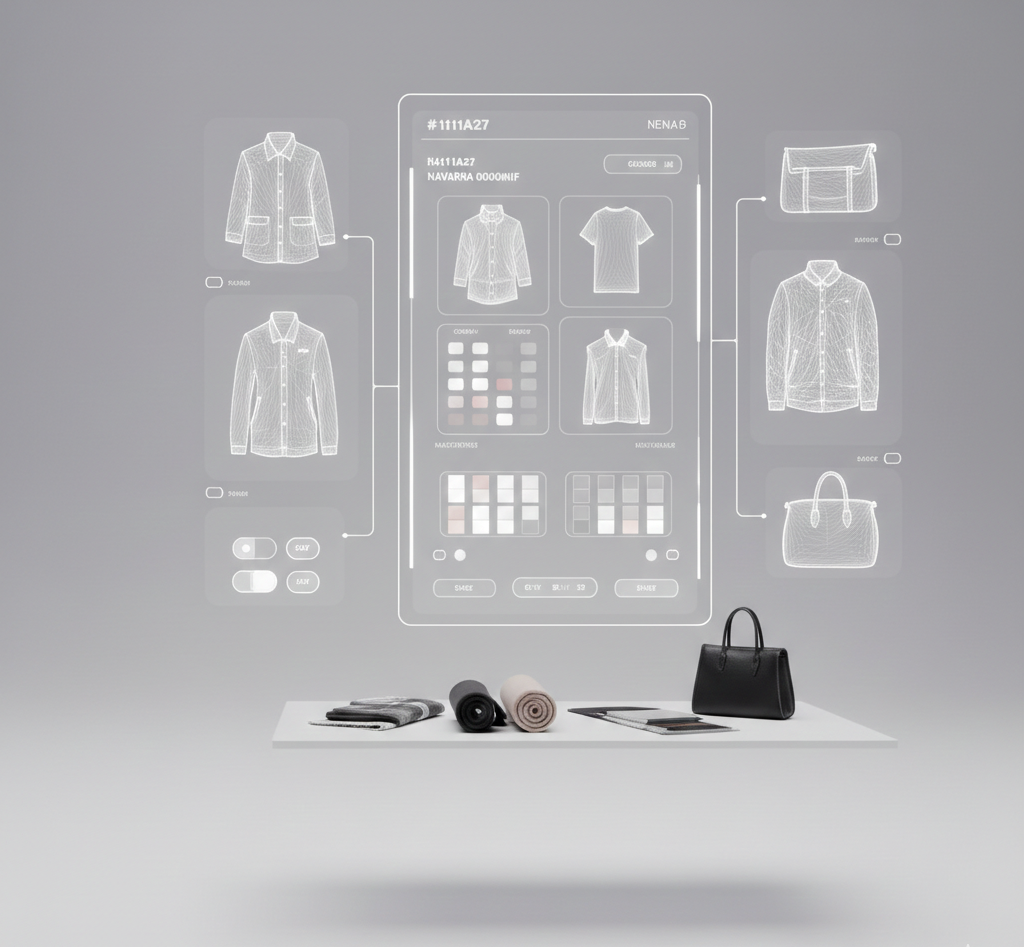
The MTO process begins with digital product presentation. Customers browse collections, often using interactive 3D configurators that let them visualize customization options in real-time. They select colors, materials, sizes, and design details, creating a truly personalized product.
Once the customer places their order and payment is confirmed, the manufacturing process begins. Production facilities, whether in-house workshops or partner manufacturers, receive detailed specifications and create that specific item. After quality control, the product ships directly to the customer.
This entire process typically takes 2-4 weeks, a timeframe that growing numbers of customers accept in exchange for personalized products and ethical production.
Why zero inventory makes business sense
Operating with zero inventory transforms business economics. Capital that would sit in warehouses instead fuels growth initiatives like marketing, product development, or improved customer experiences. Cash flow improves dramatically because you’re paid before manufacturing, not months afterward.
Risk plummets alongside inventory. You never face the nightmare of betting big on a collection that doesn’t resonate. Each product is pre-sold, eliminating the financial danger of unsold stock. This allows smaller brands to compete with established players without requiring massive capital reserves.
Flexibility becomes your competitive advantage. When you’re not locked into inventory commitments made months ago, you can respond instantly to trends, customer feedback, and market shifts. New designs can go from concept to availability in days, not seasons.
Essential Tools and Technologies for Custom Workflows
Successfully selling custom products online without inventory requires sophisticated digital infrastructure. The right tools transform what could be an operational nightmare into a streamlined, scalable process.
Advanced Product Configurators
At the heart of any successful custom product operation lies a powerful configurator. Modern AI-powered 3D configurators allow customers to visualize their customizations in photorealistic detail, rotating products, zooming in on materials, and seeing exactly what they’re buying.
These tools do more than create pretty pictures. They capture customer specifications in structured data that flows seamlessly to production systems. When a customer selects Italian leather in cognac brown with contrast stitching, the configurator translates these choices into precise manufacturing instructions.
The best configurators also guide customers through the customization process, suggesting complementary options and preventing impossible combinations. This reduces errors, minimizes returns, and creates confident buyers who trust they’re getting exactly what they envisioned.
Production Management Systems
Behind the scenes, robust production management becomes critical. Custom workflow systems coordinate between customer orders, inventory of raw materials (fabrics, hardware, trims), production scheduling, and fulfillment logistics.
These systems solve complex scheduling challenges. When you’re producing unique items, you need intelligent systems that optimize production sequences, group similar customizations to minimize changeovers, and balance workload across production capacity. Manual coordination becomes impossible at scale, automation is essential.
Integration capabilities matter enormously. Your production system must connect with your e-commerce platform, payment processor, shipping providers, and customer communication tools. Seamless data flow eliminates manual data entry, reduces errors, and keeps customers informed throughout the production journey.
Customer Communication Platforms
Transparency builds trust, especially when customers wait weeks for their products. Automated communication systems keep customers informed at every stage: order confirmation, production start, quality check completion, and shipping.
These communications also manage expectations. Clear, proactive updates about production timelines reduce anxiety and support inquiries. Customers who know exactly when to expect their custom product are remarkably patient, customers left in the dark become frustrated quickly.
Key Benefits of Selling Custom Products Without Inventory
The advantages of custom, made-to-order models extend far beyond eliminating inventory costs. This approach fundamentally transforms how fashion brands create value.
Superior Profit Margins
Custom products command premium pricing. When customers get exactly what they want, personalized to their preferences, they willingly pay 30-50% more than mass-produced alternatives. This premium pricing, combined with eliminated inventory costs and reduced waste, creates substantially higher profit margins.
You’re also not forced into margin-crushing discounts. Traditional brands discount heavily to clear seasonal inventory, sacrificing 40-60% of retail price is common. MTO brands never face this pressure. Every product sells at full price because each is made specifically for a waiting customer.
Stronger Customer Relationships
Customization creates emotional investment. When customers participate in designing their product, they develop a stronger connection to both the item and your brand. This emotional engagement translates to higher customer lifetime value, increased repeat purchases, and enthusiastic word-of-mouth marketing.
The data you collect through customization also builds deeper customer understanding. You learn precise preferences about colors, styles, materials, and fit. This intelligence informs future product development and enables increasingly personalized marketing.
Operational Agility and Scalability
Perhaps surprisingly, custom workflows can scale more efficiently than traditional inventory models. Digital systems handle complexity that would overwhelm traditional operations. Adding new customization options or product lines doesn’t require new inventory investments, just updated configurator settings.
This agility extends to testing and innovation. Want to test a new design concept? Add it to your configurator and see if customers order it. No inventory risk, no minimum production quantities, just pure market validation. Failed experiments cost virtually nothing; successful ones can scale immediately.
Sustainability as a Competitive Advantage
Operating with zero inventory and made-to-order production positions your brand as environmentally responsible. No overproduction, no waste, no excess resource consumption. This isn’t greenwashing, it’s a fundamental operational difference that conscious consumers recognize and value.
This sustainability story becomes powerful marketing. You’re not just selling products; you’re offering a better way to consume fashion. This mission attracts like-minded customers, generates media interest, and builds brand equity that transcends individual products.
Building Your Custom Product Business: Practical Steps
Transitioning to a custom, zero-inventory model requires careful planning, but the path is clearer than ever. Modern fashion solutions provide comprehensive frameworks that address the unique challenges of custom apparel production.
Start with Your Core Offering
Begin by identifying which products work best for customization. Not every item needs endless options. Focus on products where personalization creates significant value, items customers wear frequently, products that benefit from perfect fit, or pieces that express personal style.
Define clear customization parameters. Too few options feel limiting; too many overwhelm customers and complicate production. Start with 3-5 meaningful customization categories (color, material, fit, key design details) and expand based on customer feedback and production capabilities.
Establish Reliable Production Partners
Your production capability determines everything. Whether building in-house manufacturing or partnering with specialized makers, ensure they can handle custom orders efficiently, maintain quality consistency, and scale with your growth.
Evaluate production partners on flexibility, not just cost. The cheapest manufacturer optimized for bulk production will struggle with custom workflows. Look for partners experienced with small-batch, made-to-order production who understand the importance of precise specifications and quick turnarounds.
Implement the Right Technology Stack
Choose solutions that integrate seamlessly. Your configurator, production management, e-commerce platform, and customer communication tools must work together flawlessly. Disconnected systems create manual work, errors, and poor customer experiences.
Prioritize user experience in your configurator. The tool should be intuitive, fast, and visually impressive. If customers find customization confusing or slow, they’ll abandon the process. Invest in quality here, your configurator is essentially your digital showroom.
Develop Customer Education
Many customers haven’t experienced true product customization. They need guidance understanding options, visualizing outcomes, and appreciating the value of personalized products. Create content that educates: style guides, material explanations, fit advice, and inspirational lookbooks showcasing customization possibilities.
Clear communication about timelines is crucial. Set realistic expectations about production and delivery times. Under-promise and over-deliver. Customers who expect their custom product in four weeks and receive it in three are delighted; those expecting two weeks and waiting four are furious.
Conclusion: The Future of Fashion Is Custom, On-Demand, and Inventory-Free
The ability to sell custom products online without inventory represents more than an operational innovation, it’s a fundamental reimagining of how fashion brands create and deliver value. By embracing made-to-order production, zero inventory models, and sophisticated custom workflows, fashion brands can simultaneously improve profitability, enhance sustainability, and deliver the personalized experiences modern consumers demand.
The technology, production capabilities, and consumer readiness have converged to make this model viable at any scale. Whether you’re launching a new brand or transforming an established one, the zero-inventory, custom production approach offers a compelling path forward in an increasingly competitive and environmentally conscious market.
The brands that thrive in fashion’s future won’t be those with the largest warehouses, they’ll be those with the smartest systems, most flexible production, and deepest customer connections.
Ready to transform your fashion brand with custom, made-to-order production? Book a call with our experts to discover how Tailoor’s platform can help you sell custom products online without inventory, reduce waste, and build a more profitable, sustainable fashion business.