
AI-3D Configuration for Fashion & Apparel Brands
The next generation of AI Product & Visual Configuration will create customized garments with photorealistic quality, reduce returns, and accelerate on-demand production.
In a market where over 71% of consumers expect customizable products and more than 40% are willing to pay more for items configured to their preferences, Tailoor offers a platform that blends technological power with ease of use.
Configuration becomes an immersive experience, designed to meet the needs of fashion brands and the expectations of an increasingly digital, demanding, and engaged end customer.
1. Why Customization is the New Standard in Fashion
Customization has evolved from a “nice-to-have” feature to a fundamental requirement for contemporary fashion. Customers want to participate actively in the creative process—watching the garment take shape in real-time while understanding materials, proportions, and silhouettes.
Today, fashion is undergoing a transformation driven by the consumer and their desires: over 80% of users want to explore real variants and combinations before purchasing, making 3D configuration the most direct answer to this demand.
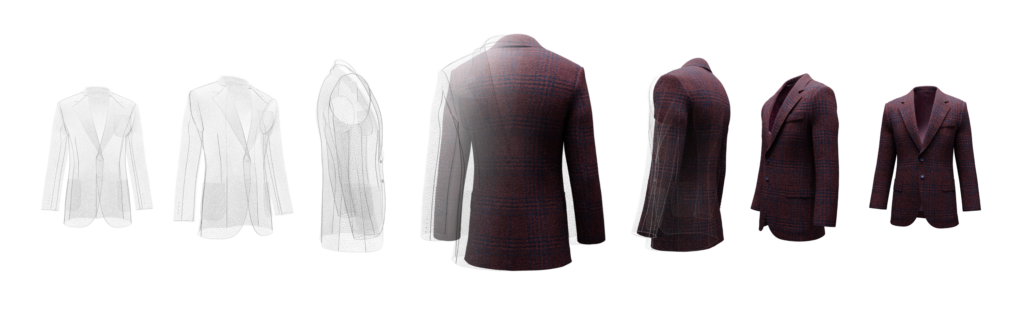
This momentum is no longer driven solely by the brand, but by a consumer who is increasingly involved, discerning, and accustomed to high-quality digital experiences.
Tailoor’s AI-powered 3D Configurator embraces this transformation through an experience that combines aesthetics, technical precision, and enterprise integration. The platform allows brands and retailers to customize complex garments while maintaining consistency with production workflows, ensuring scalability and drastically reducing errors, physical samples, and development times.
Tailoor is not just a technical configurator; it is a new way to design, narrate, and sell fashion. It is a platform where creativity meets operational efficiency, where the end customer becomes the protagonist, and where the brand can gather valuable insights to define future collections.
2. Why it Matters for the Fashion Sector
In fashion, nothing is more important than the ability to imagine the final product. Shapes, volumes, materials, and details all contribute to the perception of value. Any visual uncertainty can become a barrier to conversion. This is why 3D configuration plays a strategic role—making the product customizable, understandable, and instantly desirable.
According to the latest industry research, 74% of users state they feel more confident in their purchase when they can view the product in 3D. This is a clear signal of how digital realism is becoming a decisive factor in consumer choices.
Brands must manage increasingly complex collections—comprising color variants, patterns, capsules, and special editions—all while consumers demand fluid, clear, and engaging experiences.
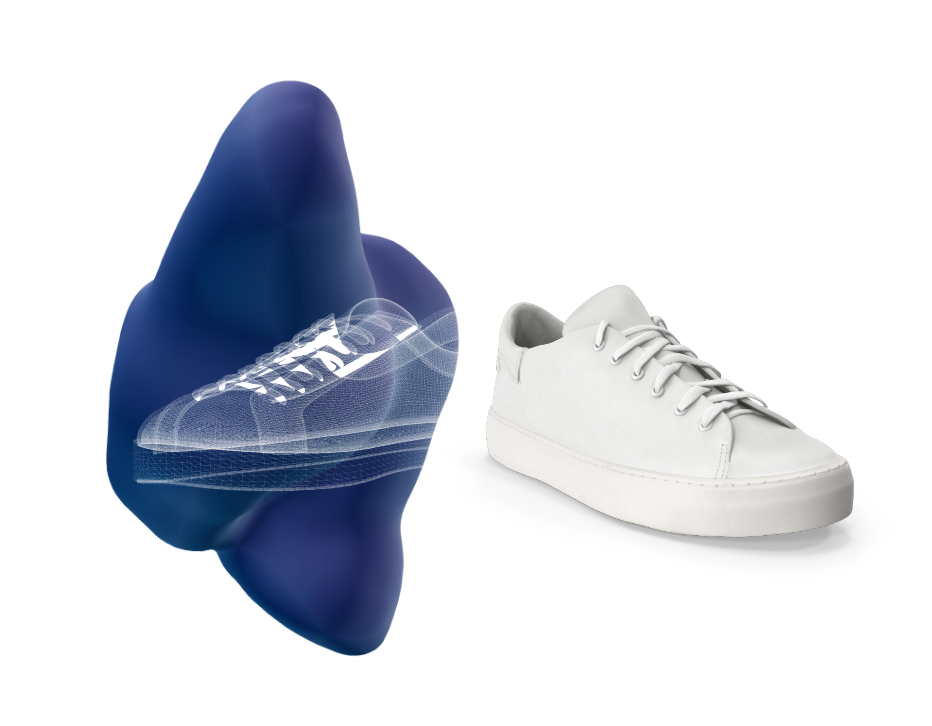
Traditional configurators are no longer sufficient because they are either too technical or lack scalability. Tailoor overcomes these limits by introducing a fashion-first approach, where visual quality, user-friendliness, and technological power coexist.
Critical Factors for the Fashion Sector:
> Consumers want to try and modify their products before purchase.
> Brands seek scalable and sustainable solutions.
> Competitors offer technical tools; Tailoor offers a complete User Experience.
> Customization is an increasingly relevant conversion factor.
Tailoor transforms the complexity of fashion into an intuitive, fluid, and omnichannel journey.
3. How AI Configuration Optimizes the Entire Value Chain
An AI-based 3D configuration platform impacts every stage of the value chain. It stimulates creativity, boosts marketing capabilities, drives sales conversion, and sustains production.
It improves the user experience, accelerates internal processes, and allows brands to make decisions based on real data rather than mere hypotheses.
Thanks to photorealistic quality, customers buy with greater confidence. Thanks to enterprise integration, brands can manage complex catalogs without increasing operational complexity. Customer interaction itself becomes creative feedback, useful for capsules, seasonal collections, or co-creation experiments.
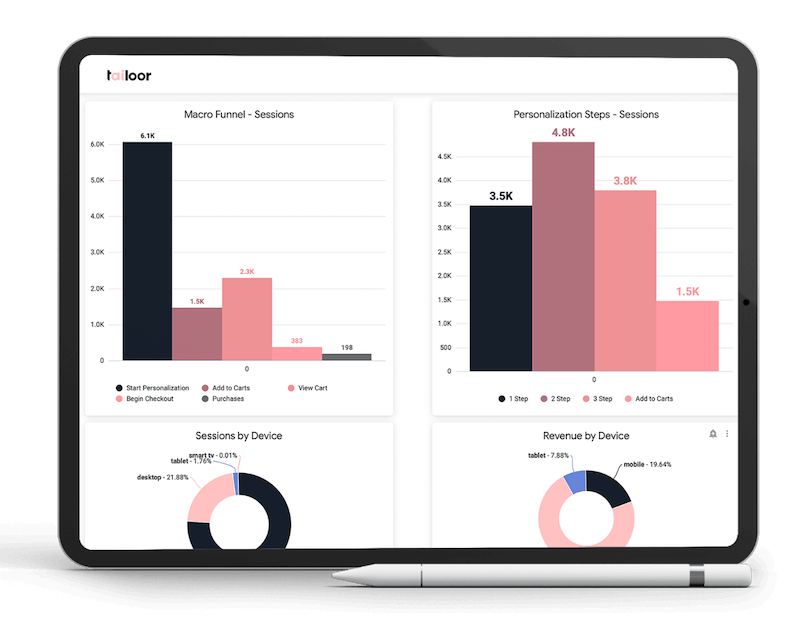
5 Measurable Benefits:
1) Reduced Returns: Industry studies indicate an average reduction of 20–25%.
2) Increased Conversion: Conversion rate growth of +30/40%.
3) Waste Reduction: Elimination of physical prototypes and samples.
4) Data-Driven Insights: Improved design, assortments, and collections.
5) Enterprise Scalability: Handles complex and variable catalogs and supply chains.
Tailoor doesn’t just impact the front-end; it transforms the back-end.
4. Tailoor’s Technological Architecture
Tailoor unites everything needed to turn fashion customization into a scalable, fluid process suitable for modern brands. The AI Configurator interprets complex product rules and generates variants consistent with materials, finishes, and production constraints; the photorealistic 3D visualization renders textures, volumes, and details with high realism, reducing user uncertainty and increasing interaction quality.
Every configuration is accurate because it stems from an intelligent model that recognizes possible combinations, excludes non-producible ones, and maintains aesthetic and technical consistency across the entire catalog. While the platform is designed for a natural, immersive user experience, it provides companies with a robust architecture capable of integrating with existing systems (ERP, PLM, PIM, DAM).
Tailoor is an ecosystem, connecting creativity, sales, and production to make customization a real and sustainable competitive advantage.
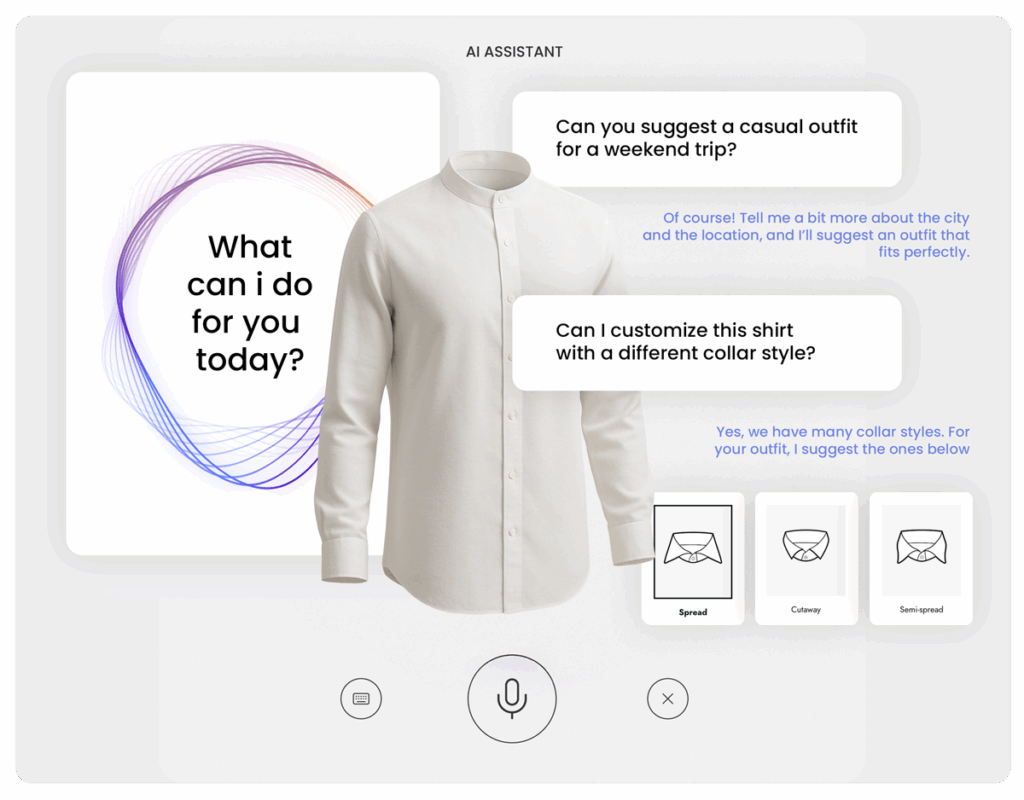
Tailoor’s 3D product Configurator Core Capabilities
The 3D configurator allows for the creation and visualization of products in every possible variant with high-end photorealistic quality.
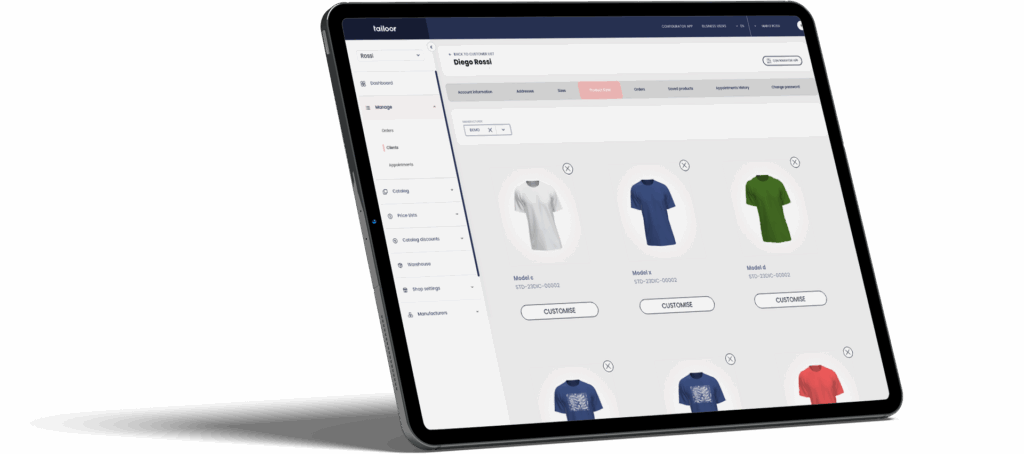
1. AI-driven Customization: Colors, Materials, Finishes
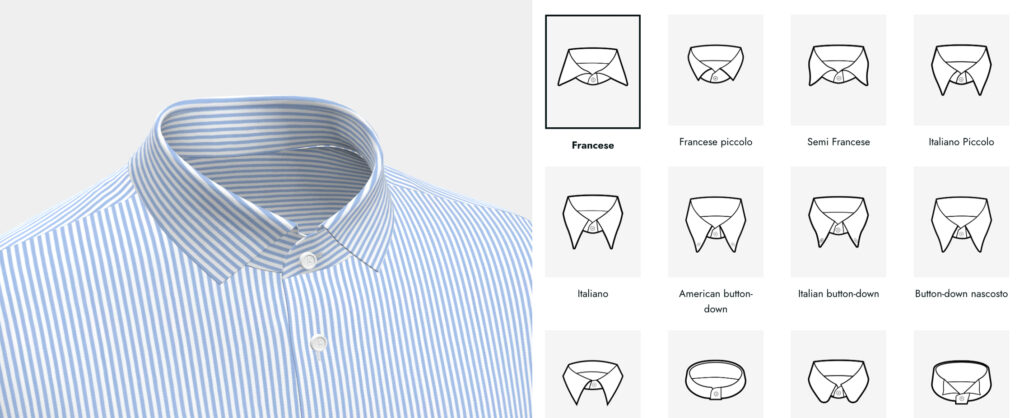
Users can personalize every element of the product (fabrics, leathers, colors, patterns, buttons, zippers, and details).
The platform leverages AI to:
- a) Display only producible combinations.
- b) Prevent errors (e.g., incompatible material pairings).
- c) Suggest coherent variants and styles.
- d) Accelerate the overall configuration process.
2. Real-time Photorealistic Rendering
Every modification made by the user is instantly visualized through:
> Realistic textures and fabric grains.
> Dynamic lighting environments
> High-fidelity material details
> Visual quality comparable to professional photography
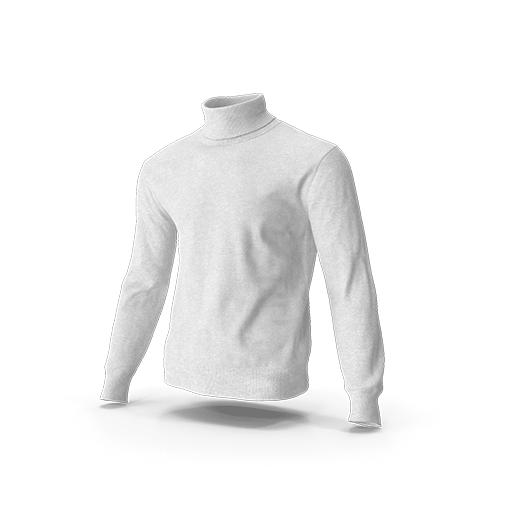
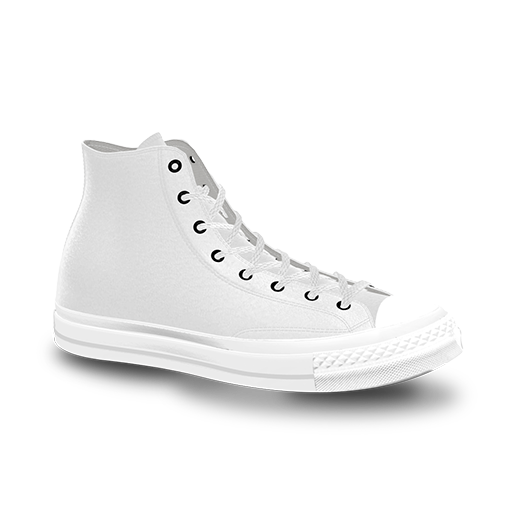
3. Multi-products or Modular Configuration
The system provides the flexibility to:
> Configure multiple items simultaneously (e.g., a full outfit or a jacket and trousers suit).
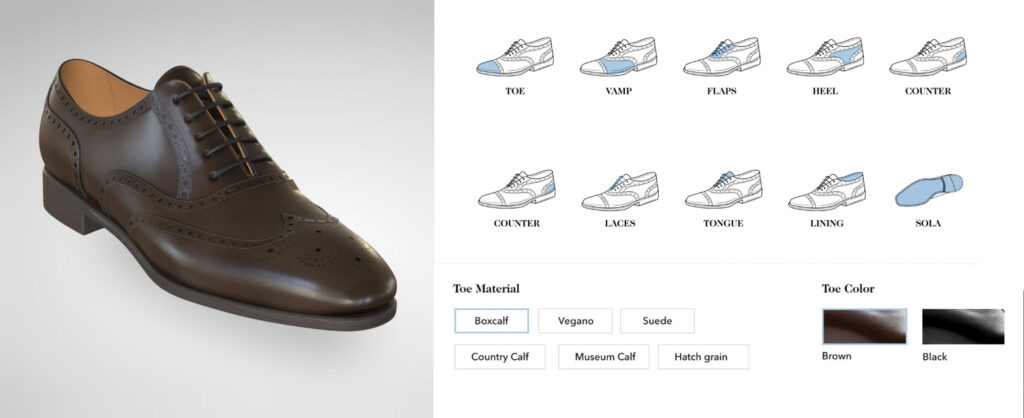
- > Configure modular products (e.g., a shoe featuring customizable soles, uppers, and laces).
- > Manage collections with shared rules across different versions or variants.
4. ERP, PLM, and Production-Ready Output
Once the product is configured, the system automatically generates:
- > Technical specifications and tech packs.
- > Production data.
- > SKU/Variant codes.
- > Supply chain information
- > Assets formatted for ERP or PLM integration.
This ensures the product can be sent directly to production with zero manual intervention.
5. How Brands Use Tailoor 3D Configurator in Fashion
The versatility of the Tailoor platform enables applications that go beyond simple product visualization. 3D configuration becomes an engine for innovation across design, marketing, retail, and production.
Data-Driven Capsule Collections
Using real-time preference data to develop targeted capsules based on the most requested materials or silhouettes.
Customizable Teamwear & Corporate Apparel
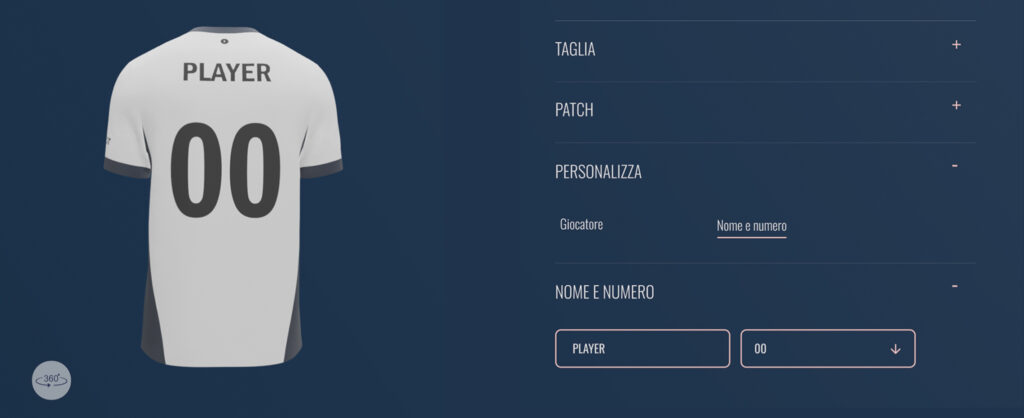
Sports teams and corporations can define fully configurable kits, reducing approval times and sampling costs.
Omnichannel Retail (B2B2C)
A shared touchpoint where a customer starts a design at home and completes it with an in-store advisor.
Premium Customization for High-Value Products
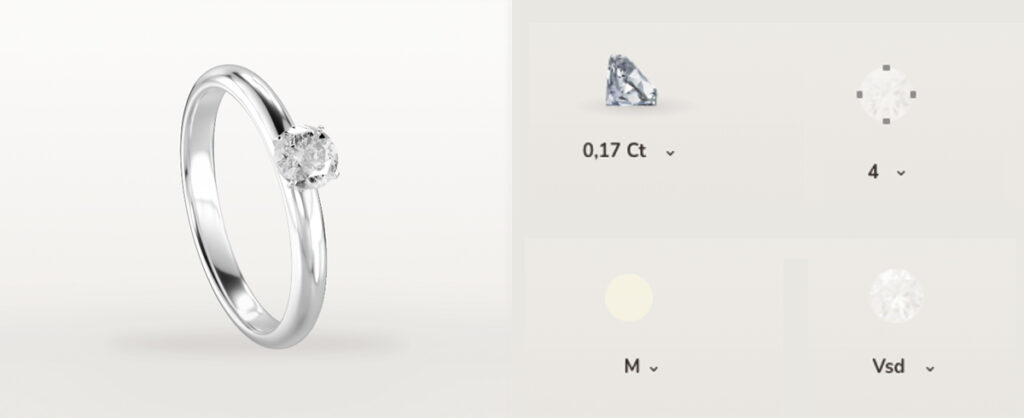
Luxury brands and ateliers can present complex variants with photorealistic rendering that reinforces value perception.
Case Study
Tailoor x Parma Calcio
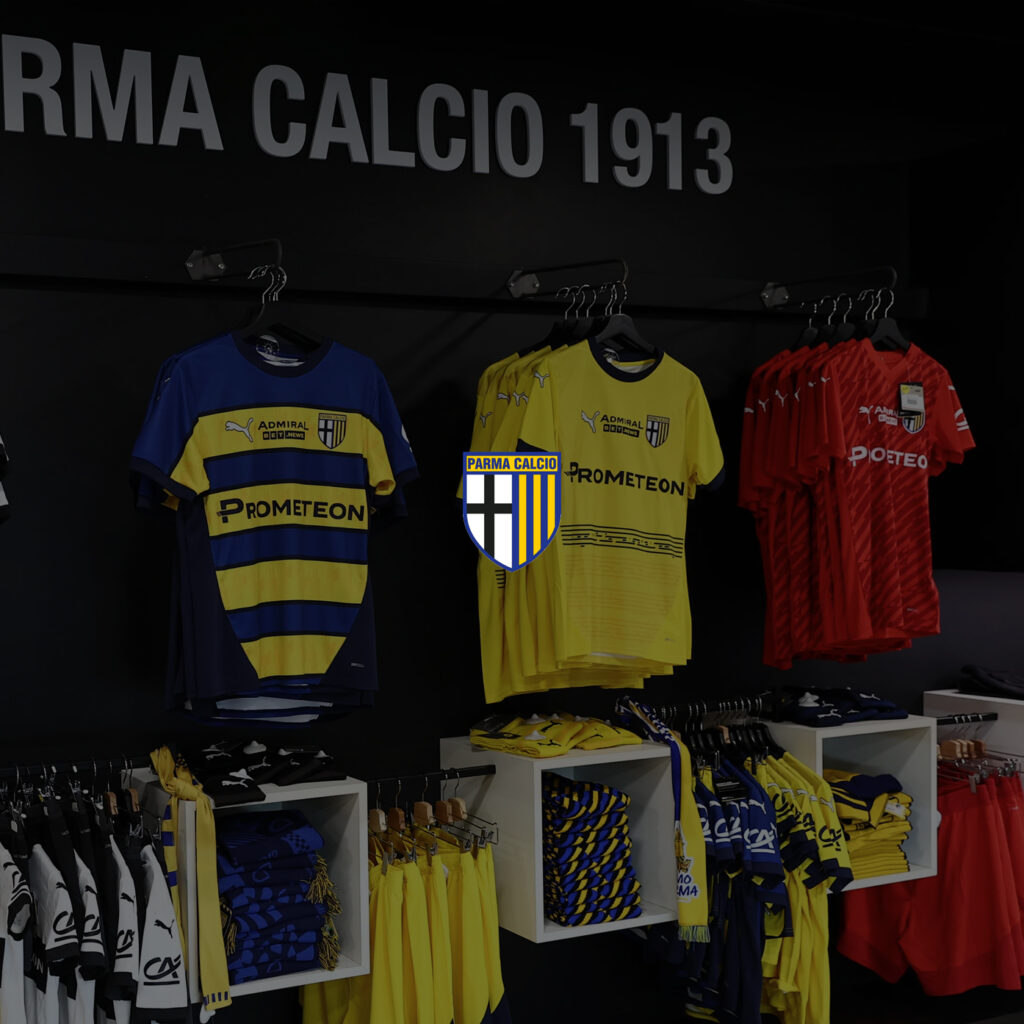
Tailoor enabled advanced 3D configuration for Parma Calcio’s teamwear and merchandising, allowing real-time variant visualization, reducing ordering errors, and speeding up on-demand production.
Results: +28% in revenues from customized items
Laike.me x SickLuke
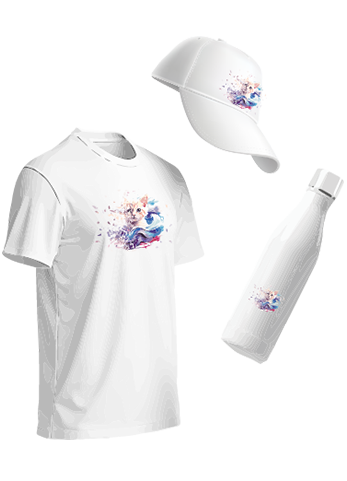
A famous songwriter and producer launches a limited edition “configurable drop” where every hoodie or jersey can be personalized with names thanks to the power of the new platform by Tailoor: Laike.me.
Result: Zero overstock, high community engagement, and a 35% increase in margins thanks to the made-to-order model.
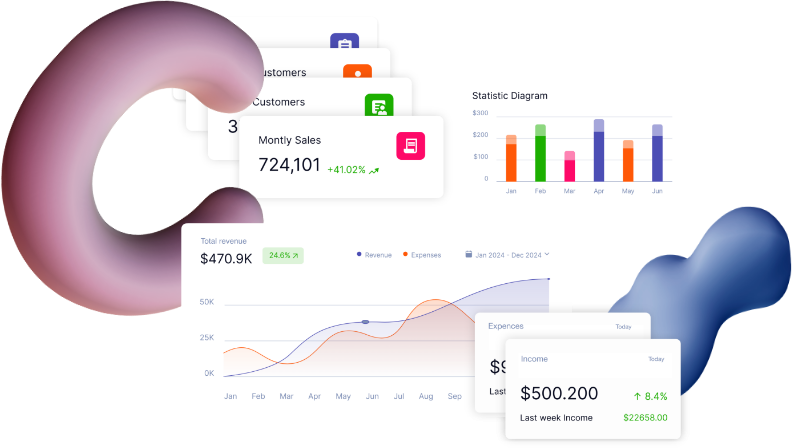
6. KPIs and Performance Driven by 3D Product Configuration
3D and AI technologies are reshaping how customers discover, evaluate, and purchase fashion products. Highly accurate visualization reduces uncertainty, builds trust, and shortens the decision-making journey.
For brands, this translates into measurable performance across three key areas: conversion rates, return reduction, and process efficiency. Market data confirms a growing, cross-functional impact throughout the entire funnel—from initial engagement to final sales metrics.
● “74% of users prefer to purchase after viewing a product in 3D.”
The quality of the rendering directly impacts perceived security and the overall probability of purchase.
● “Customization increases purchase intent by up to 40%.”
Dynamic and engaging configurations make the user feel like an active participant in the creative process.
● “VTO (Virtual Try-On) reduces fit-related returns by 22–25%.”
An accurate simulation of the product on the body eliminates one of the primary drivers of returns.
7. Why Choose Tailoor AI Visual Configuration Platform
Tailoor stands out for its AI-first approach and superior visual quality. It is built for enterprise brands that need to manage large catalogs and complex production flows while offering a simplified, modern experience to the end user.
Competitive Advantages:
- 1) Real-time photorealistic 3D visualization.
- 2) Flexible integration with omnichannel workflows, e-commerce platforms like Shopify, WooCommerce and others plus ERPs, PIMs etc..
- 3) AI-Configurator integrated with on-demand production.
- 4) Support for diverse categories: from Luxury and Sportswear to Streetwear.
- 5) B2B + B2B2C experience reflecting modern consumer demand.