
AI-3D Configurator for Jewelry & Luxury
In the Jewelry & Luxury sector, the purchase decision is not based solely on design — it depends on the perception of value. Metals, stones, cuts, and finishes are not simple technical variables: they are elements that define uniqueness, identity, and investment. In this context, the ability to represent a piece of jewelry accurately becomes as decisive as the product itself.
According to the Luxury Goods Worldwide Market Study by Bain & Company, the personal luxury goods market reached 364 billion euros in 2024. In parallel, Shopify reports that 3D experiences and augmented reality can increase conversion rates by up to +94% compared to static content.
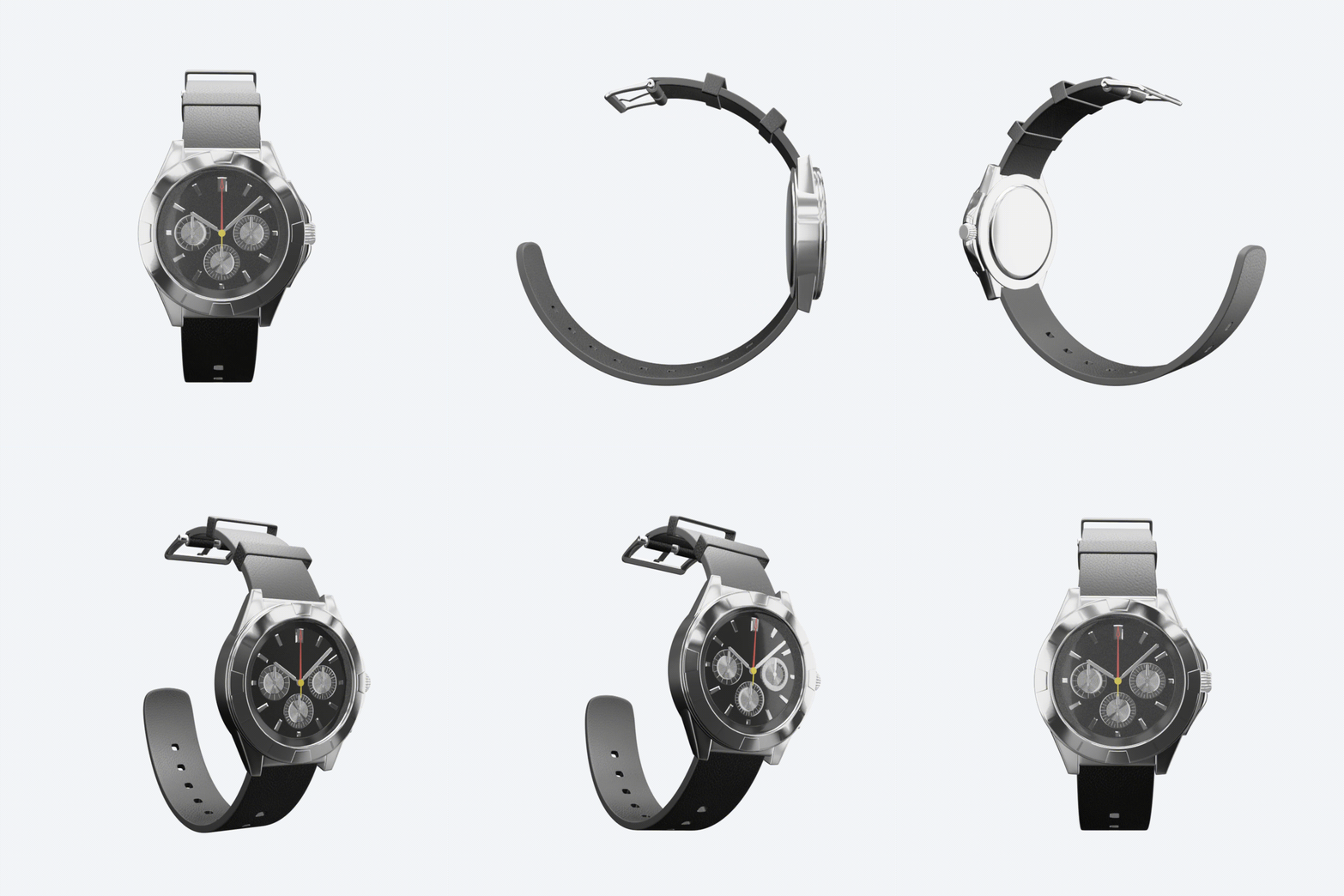
In this scenario, Tailoor introduces a new level of AI Product & Visual 3D Configuration for premium Jewelry & Luxury brands: metals, stones, engravings, and settings configured and displayed in real-time, with photorealistic quality designed to enhance high-margin products and manage complex SKUs.
1. Why Configuration Has Become Central to Luxury
In luxury, perceived value is strictly linked to trust. A customer does not just buy a product — they buy a promise: quality, authenticity, and consistency between what they see and what they will receive. In this delicate balance, every element that reduces the distance between expectation and reality becomes strategic.
According to McKinsey & Company, the luxury purchase journey is increasingly influenced by digital touchpoints, even when the final transaction takes place in a boutique. The online exploration phase becomes the decisive moment in which the customer progressively builds desire, understanding, and security regarding the product.
In the case of jewelry, this dynamic is even more pronounced: microscopic details, minimal variations between configurations, and a strong symbolic load make the decision-making process slower and more exposed to uncertainty.
An advanced 3D configurator intervenes precisely at this critical point, transforming an abstract process into a concrete and readable experience — allowing the customer to explore the product actively, understand the impact of their choices, and reach a decision with greater awareness.
2. From the Boutique Window to Digital Configuration
Traditionally, luxury has been based on a physical experience: boutiques, ateliers, direct relationship with the customer. Today this model does not disappear — it evolves towards a hybrid ecosystem in which digital does not replace the in-store experience, but anticipates, prepares, and amplifies it.
According to Deloitte's Global Powers of Luxury report, customer experience and loyalty represent the main growth lever for brands in the sector today, indicated as a priority by 28.6% of managers.
This change redefines the role of the boutique: from a place of discovery to a space of confirmation, where the customer arrives already with an idea, often already oriented or partially built online.
3. User Experience & Conversion: The Role of Visualization
In luxury, the quality of visualization is not an accessory element — it is a structural component of the experience. It is not just about showing a product as much as making it understandable, readable, and evaluable even before it physically exists.
As reported by data from the Baymard Institute, one of the main causes of abandonment in the purchasing process is the lack of clear or sufficiently detailed product information — a factor that becomes even more critical in high-value categories. The brilliance of a stone, the depth of a metallic surface, or the precision of a setting are all signals that guide the overall evaluation of the product.
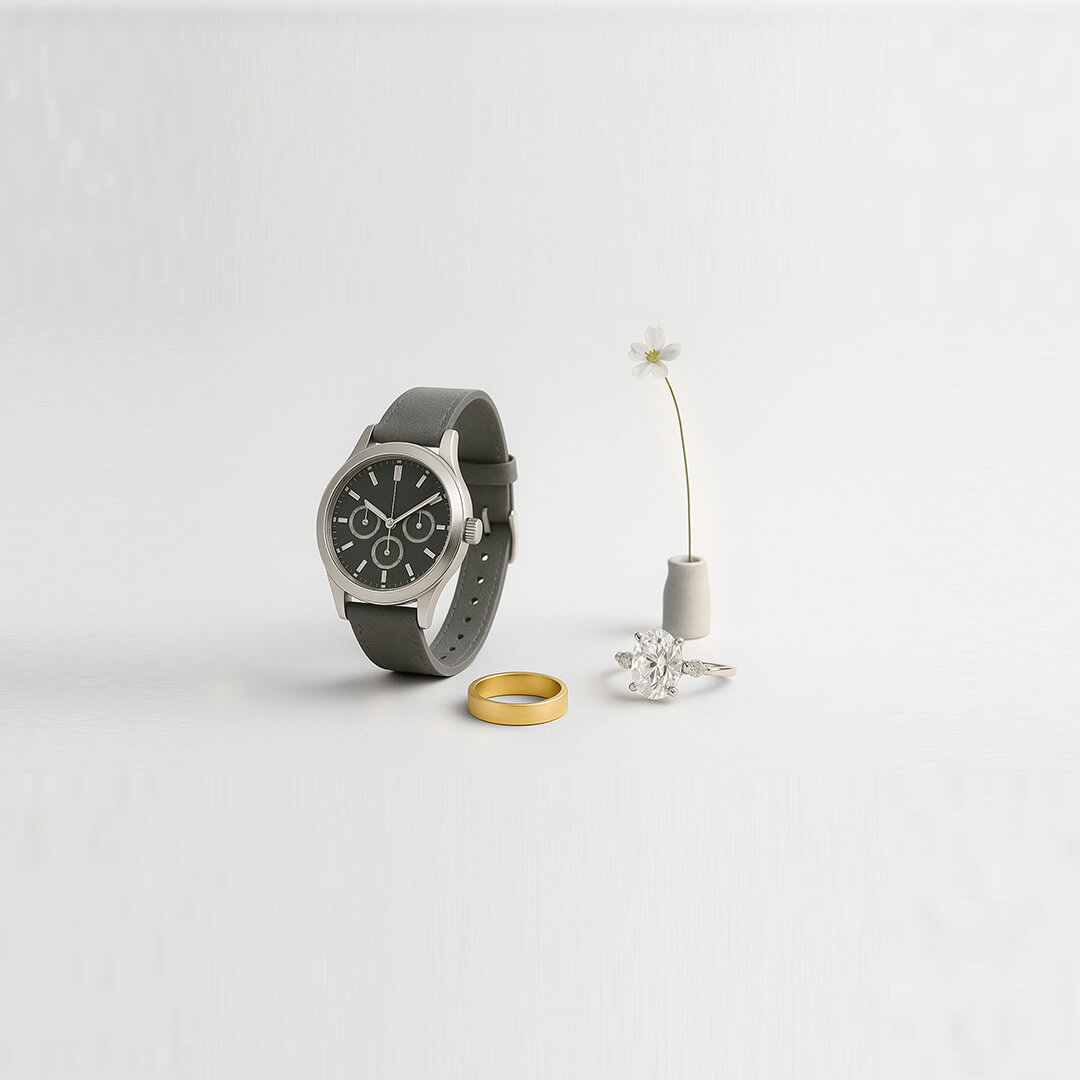
What the configurator enables
- Observe the jewel from any angle in real-time
- Evaluate reflections and interactions with light
- Compare combinations of metals and stones
- Understand the final result before production
The result for brands
- Higher conversion on personalized products
- Increased average order value
- Fewer returns due to mismatched expectations
- Stronger brand premium perception
4. Operational Impact: From Customization to Production
In the jewelry sector, personalization is not just a commercial lever — it is a structural operational complexity. Every variation, from the choice of stone to the modification of the setting, traditionally involves a sequence of manual steps: design, validation, prototyping, and comparison with the customer. This process introduces error margins and costs that are difficult to scale.
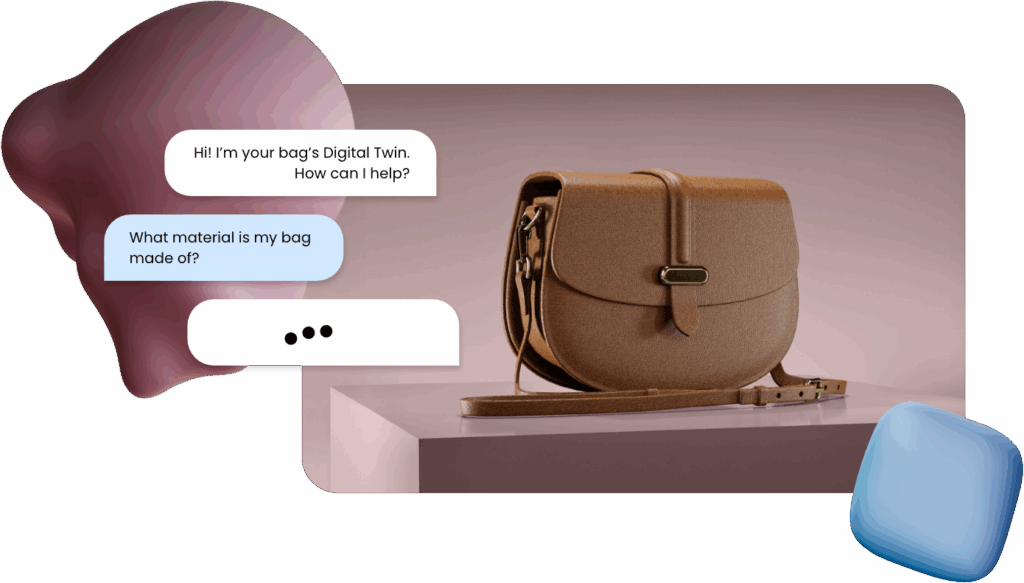
The introduction of a 3D configurator integrated into production flows allows this model to be radically transformed. Configuration is no longer a moment separate from production — it becomes an integral part of the same system, automatically translating user choices into technical data usable downstream.
5 Measurable Benefits
- Optimization: Reduction of physical samples and prototypes
- Increased Conversion: Conversion rate growth of +30/40%
- Waste Reduction: Decrease in order errors and material mismatches
- Data-Driven Insights: Faster collection development process
- Enterprise Scalability: Full management of complex variants and SKUs
5. Use Cases: Concrete Applications in Jewelry & Luxury
3D configuration finds one of its most natural applications in the Jewelry & Luxury sector, because it is one of those sectors in which technical complexity and emotional experience coincide. Here it is not just about offering variants, but about accompanying a high-intensity symbolic decision-making process.
Engagement Ring Configurator: The Blue Nile Model
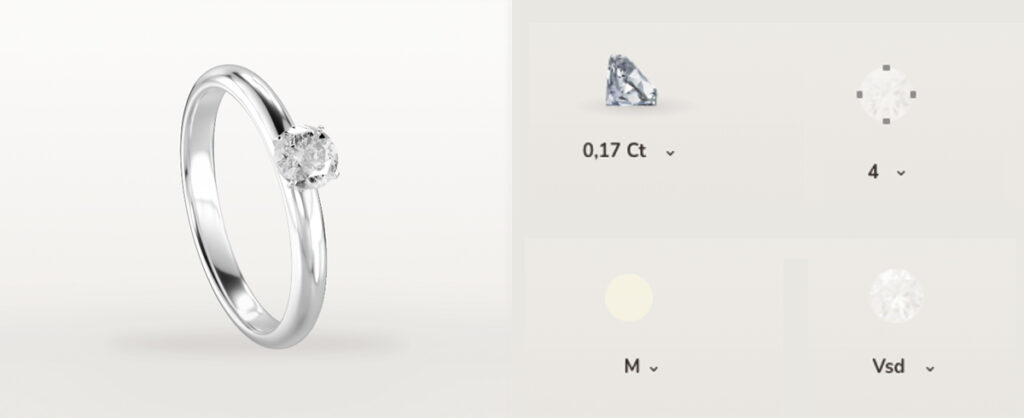
In Blue Nile's customizable models, the configurator represents the heart of the experience. The customer is not faced with a limited selection of finished products — they become a true co-creator. The guided process starts from the stone (defining cut, carat, clarity, color) and progressively develops towards the realization of a unique moment.
- Visualize even minimal differences between stones
- Compare options in real-time
- Maintain transparency on price and features
- Build trust progressively, reducing uncertainty
The Hybrid Model: Digital + Boutique
Brands like Taylor & Hart integrate digital configuration with human advice. The customer starts the journey online, explores combinations, and reaches an initial configuration — then completes the process with a consultant who refines and validates the final choice.
Configuration as a bridge
Digital and physical no longer compete — they reinforce each other. The configurator gives customers a language to arrive at the boutique with, and gives consultants a shared canvas to work from. The result is a more fluid, more informed, and more consistent relationship between what is imagined and what is actually created.
In-Store Digital Configuration
More and more brands are introducing configurators directly in-store via tablets or interactive screens — virtually expanding the available assortment and making consultants active participants in the configuration process. This allows for showing variants not physically present and visualizing changes in front of the customer in real-time.
6. KPIs and Performance Driven by 3D Configuration
3D and AI technologies significantly increase trust and propensity to buy premium products. According to the Baymard Institute, the average shopping cart abandonment rate in e-commerce stands at around 69.9% — a figure that becomes even more critical in jewelry, where value and symbolic weight amplify pre-purchase uncertainty.
Configuration thus becomes a strategic lever — not just an operational one — strengthening trust, consistency, and perceived premium value throughout the user experience.
7. Why Choose Tailoor AI Visual Configuration Platform
In the 3D configurator market, few solutions truly value premium materials and micro-details at the level required by the jewelry sector. Tailoor fills this gap with an AI-first approach designed for complex customizations and unique photographic quality.
The platform elevates the customer experience while improving brand operational efficiency. According to the McKinsey State of Fashion Report, visual product quality is a top-three factor influencing premium purchases — and this is exactly where Tailoor builds its competitive edge.
Tailoor is not an alternative to existing configurators — it is the natural evolution for a sector where every detail determines the perception of value.