
Understanding AI-Virtual Try-On for Jewelry
In the jewelry sector, the perception of value is inevitably tied to visual quality. The brilliance of a stone, the depth of a setting, the finish of a precious metal, or the way a ring harmonizes with the hand directly influence the customer's final decision. Unlike other categories, a piece of jewelry is not evaluated merely as a product — it is perceived as an identity-driven, emotional, and symbolic element.
For years, this represented one of the main limitations of luxury eCommerce. Customers could not truly understand how the jewelry would react to light, how it would look when worn, or how consistent it would be with their personal style. This is the source of many hesitations typical of high-ticket purchases: uncertainty about proportions, difficulty in perceiving the real value of the product, and fear that the piece will not match expectations created online.
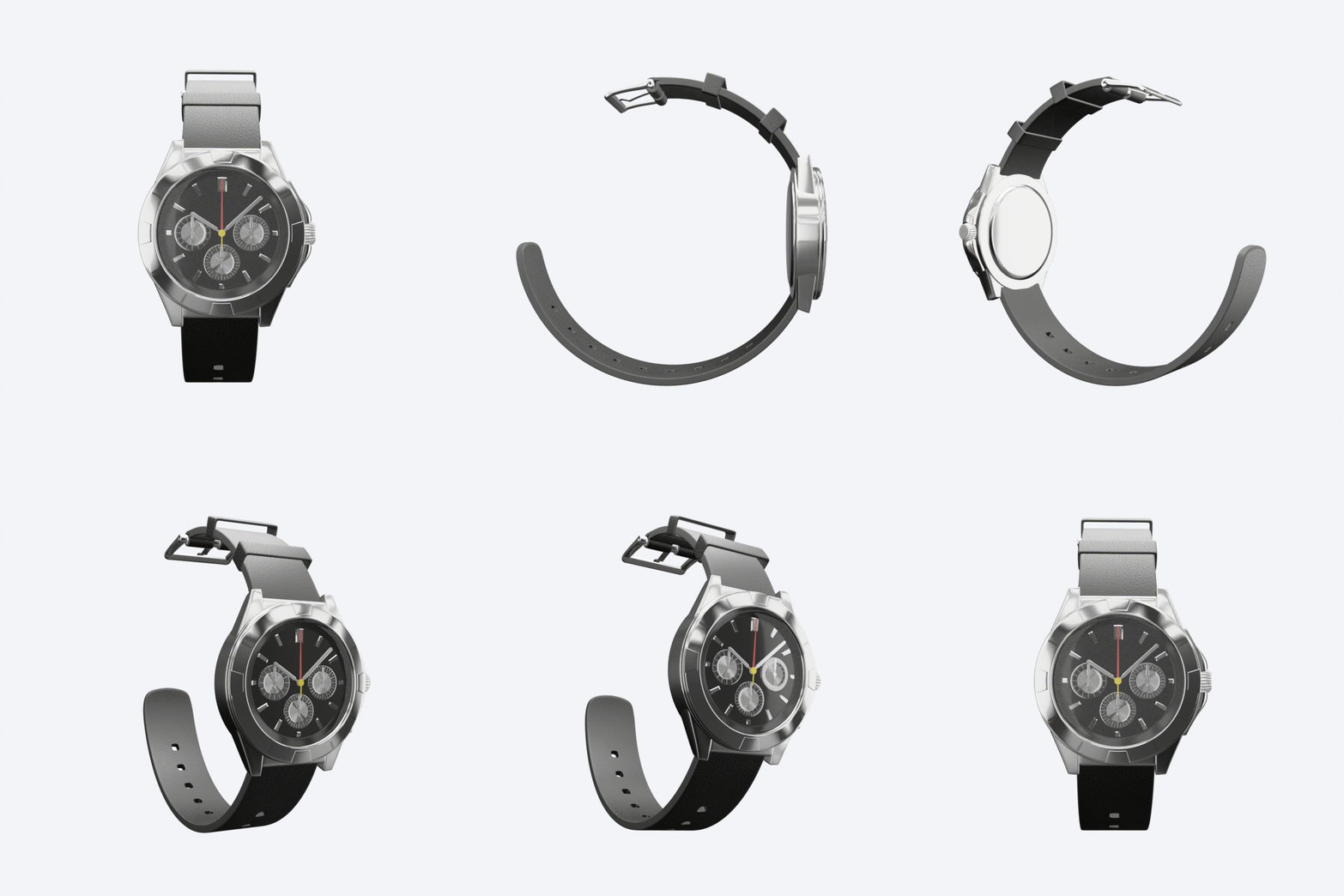
Tailoor's Virtual Try-On introduces a new generation of AI Visual Configuration for jewelry and luxury accessories — using AI-powered hand & face mapping, photorealistic rendering, and integrated 3D configuration to let customers visualize rings, necklaces, earrings, and luxury pieces directly on their own image, with millimeter precision and gem-level realism.
1. Why Virtual Try-On Has Become Essential in Jewelry & Luxury
In the jewelry sector, every detail counts: the way a ring sits on the finger, how a necklace falls on the décolleté, how earrings frame the face. These are not secondary considerations — they are the primary decision criteria. No static image can answer the question the customer truly asks: "How will this look on me?"
According to McKinsey, 71% of consumers expect personalized interactions from brands, while 76% feel frustrated when these expectations are not met. In jewelry, where the symbolic and emotional weight of the purchase is highest, this expectation gap translates directly into hesitation, abandonment, and lost revenue.
Tailoor's Virtual Try-On aims to reduce this distance between the physical and digital experience. It is not simply about overlaying an object onto a photograph — it is about creating an immersive experience aligned with the logic of contemporary luxury retail.
2. Why VTO Is Strategic for Jewelry & Luxury
In the jewelry & luxury accessories market, perceived value largely depends on the ability to represent materials, light, and details with extreme precision. Users do not just want to see the product — they want to understand how the jewelry interacts with their skin, their style, and their personal image.
This makes the sector particularly sensitive to the quality of the digital experience. An inaccurate representation can compromise customer confidence and drastically slow down conversion. For this reason, generic virtual try-on tools often prove insufficient: they do not deliver the depth, brilliance, and realism appropriate for high-value luxury products.
Tailoor addresses this need with an AI-first approach designed specifically for jewelry and premium accessories. The platform simulates light refraction, metallic reflections, gem brilliance, and realistic proportions directly on the user's hand or face. Brands like Cartier, De Beers, and Gucci are already experimenting with immersive technologies to increase engagement and customer confidence in these categories.
Why generic tools fail in luxury
- No gem brilliance or light refraction simulation
- Cannot render precious metal depth and finish
- Ignore body proportions and skin tone interaction
- Disconnect from the brand's premium visual identity
- No integration with 3D stone/metal configuration
Tailoor's jewelry-specific approach
- AI hand & face mapping with millimeter precision
- Simulation of gem brilliance under varied lighting
- Accurate rendering of metals, settings, and textures
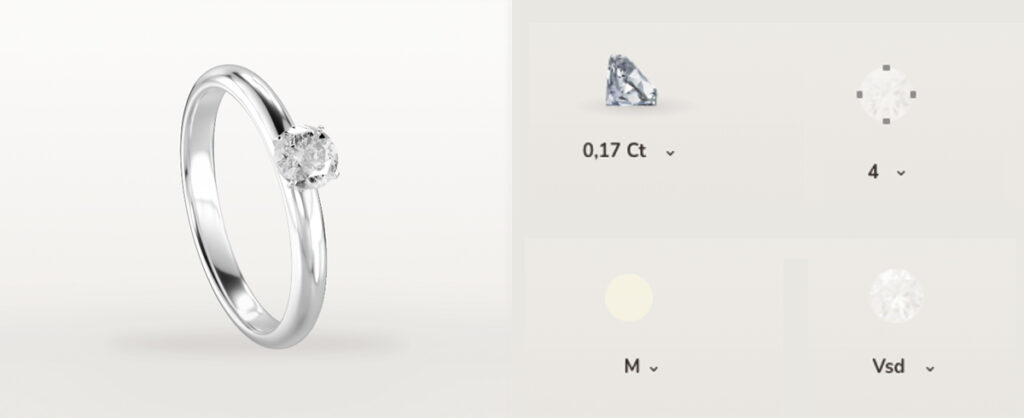
- Live configuration of stones, engravings, metals
- Experience consistent with luxury brand positioning
3. How VTO Improves Conversions, Trust, and Customer Experience
Virtual Try-On concretely alters user behavior during the purchase journey. When customers can visualize a piece of jewelry directly on their own hand or face with a credible level of realism, the gap between the physical and digital experience is drastically reduced. The customer feels more involved, more secure, and closer to the final purchase.
According to Snapchat, 80% of users who use AR experiences feel more confident in their purchase after interacting with immersive tools. ScienceDirect confirms that Virtual Try-On technologies are becoming increasingly central for improving customer experience, engagement, and trust in online purchasing. Grand View Research highlights how growth is driven by rising demand for immersive, personalized, and interactive shopping in the luxury category.
6 Measurable Benefits
- Increased Confidence: Over 80% of users feel more confident after immersive AR experiences
- Higher Conversion: Reduced hesitation and faster decision-making for high-ticket purchases
- Return Reduction: Fewer remakes and returns on personalized or custom-made pieces
- Infinite Configuration: Try endless stone, metal, and engraving variations without physical prototypes
- Greater Engagement: Longer interaction time with the product — more memorable customer journey
- Boutique Preparation: Customers arrive at appointments with a clear vision, shortening the decision cycle
4. The Technical Architecture of Tailoor's Jewelry VTO
Tailoor combines AI-powered hand & face mapping, photorealistic rendering, and 3D configuration into an ecosystem designed specifically for jewelry and luxury accessories. The platform analyzes body proportions, geometries, and contact points, simulating the behavior of the jewelry with advanced precision.
Unlike generic tools, the system does not just "place" an accessory onto the user's image — it works to render depth, brilliance, reflections, and the realistic behavior of gems under different lighting conditions. This allows brands to offer an experience more consistent with the perceived value of luxury products.
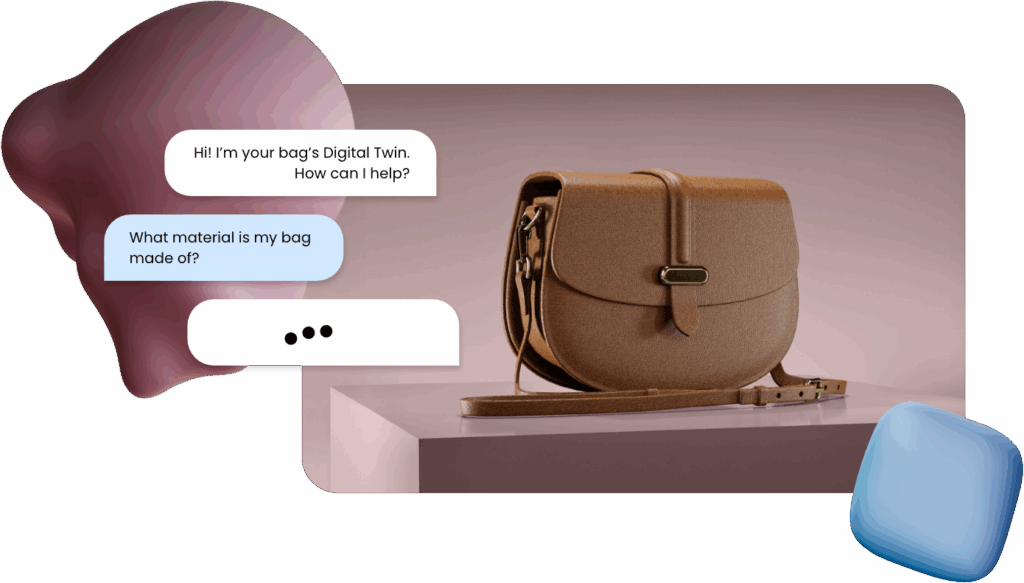
Integration with the 3D configurator allows users to modify metals, stones, engravings, and setting details in real time — comparing variants and instantly understanding how each modification affects the final result.
5. How Luxury Brands Are Using Jewelry VTO
More and more luxury Maisons are integrating immersive technologies into their digital customer journeys. Cartier allows users to explore luxury rings and jewelry in a more interactive way. Gucci has introduced AR experiences dedicated to premium accessories. De Beers uses advanced digital tools to personalize and visualize luxury rings before purchase. These examples show how Virtual Try-On is no longer a technical feature — it is a strategic lever for customer experience, conversion, and perceived value in luxury retail.
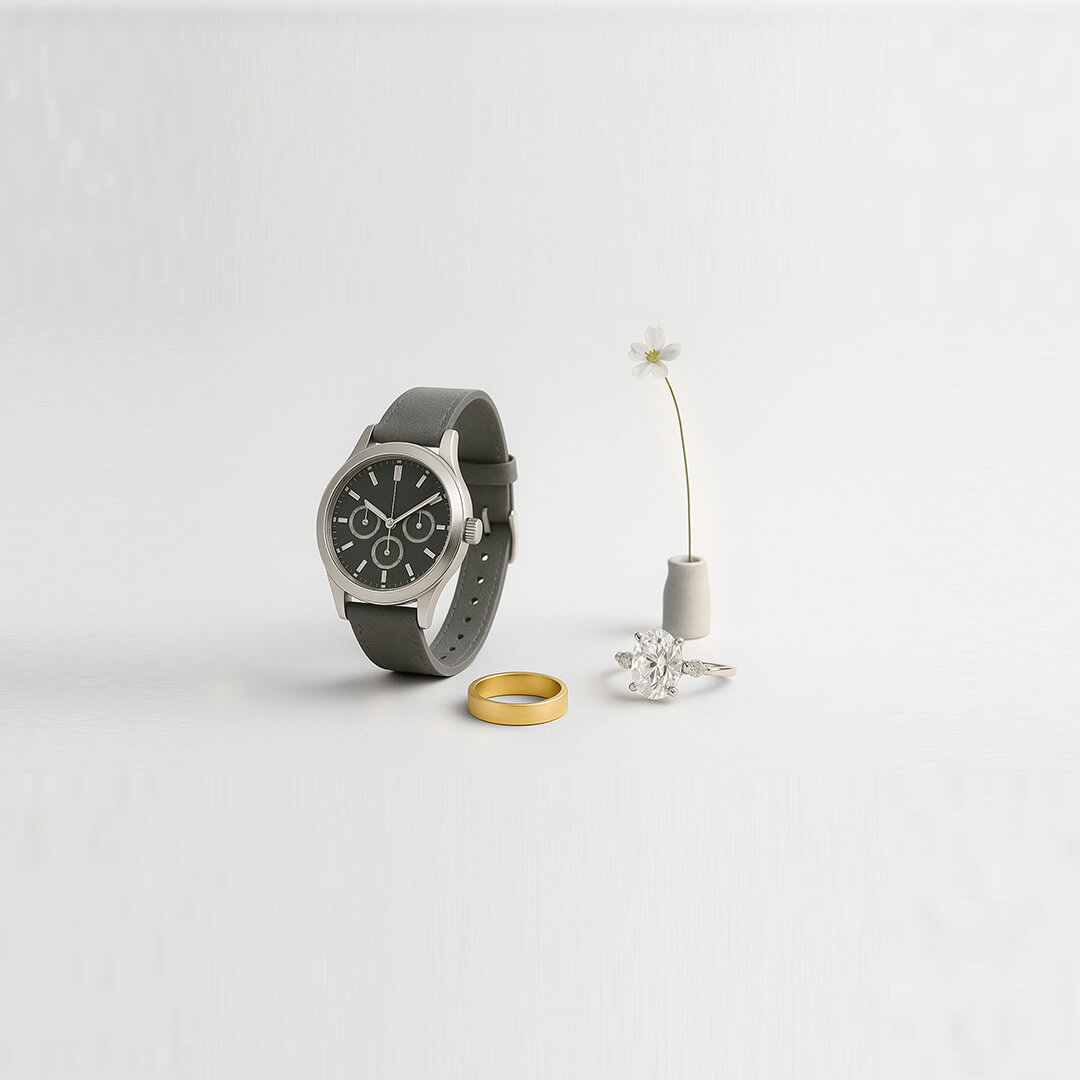
Main use cases for jewelry & luxury brands
› Online jewelry stores offering configuration + virtual try-on in a single journey
› Luxury ateliers looking to reduce physical prototypes and preliminary boutique appointments
› Brands offering customizable, made-to-order collections (rings, necklaces, bespoke pieces)
› Omnichannel customer journeys spanning online exploration and boutique appointment
› Live configuration of stones, engravings, metals, and settings during the virtual try-on
6. VTO vs. Traditional Jewelry E-Commerce: A Comparison
| Capability | Static images | Generic VTO | Tailoor Jewelry VTO |
|---|---|---|---|
| Gem brilliance & light refraction simulation | ✗ | ✗ | ✓ |
| Precious metal depth & finish rendering | ✗ | Partial | ✓ |
| AI hand & face proportion mapping | ✗ | Partial | ✓ |
| Live stone/metal/engraving configuration | ✗ | ✗ | ✓ |
| Made-to-order production integration | ✗ | ✗ | ✓ |
| Luxury brand positioning consistency | Partial | ✗ | ✓ |
| Omnichannel (online + boutique) | ✗ | Partial | ✓ |
7. Industry KPIs — Why Virtual Try-On Works in Jewelry
In jewelry, the inability to truly understand aesthetic value before buying is the primary driver of hesitation and abandonment. Virtual Try-On technologies directly address this gap — and the data confirms it.
8. Why Choose Tailoor for Jewelry & Luxury VTO
In the landscape of Virtual Try-On platforms, Tailoor stands out for an approach designed specifically for jewelry and luxury accessories. The combination of AI-powered mapping, photorealistic rendering, and 3D configuration allows for an experience that is more realistic, precise, and consistent with the value of premium products.
The platform does not merely replicate a physical try-on — it evolves it into a smarter, more immersive digital experience capable of connecting personalization, customer experience, and omnichannel retail into a single enterprise-ready ecosystem. Tailoor enhances product detail, brilliance, and uniqueness, transforming Virtual Try-On into a strategic lever for conversion, engagement, and perceived value.
Frequently Asked Questions
Tailoor transforms Virtual Try-On from a simple technical functionality into a strategic lever for conversion, engagement, and perceived value — in a market where the quality of the digital experience is the decisive competitive advantage for luxury brands.