
How to grow your online business with 3D, AR and Virtual Try-On
For years, e-commerce asked customers to take a leap of faith: choosing from a photo — a single image. Perfect shots, yes, but with a structural limit: a shot is a moment, not an experience. Visual Commerce emerged to cross that boundary.
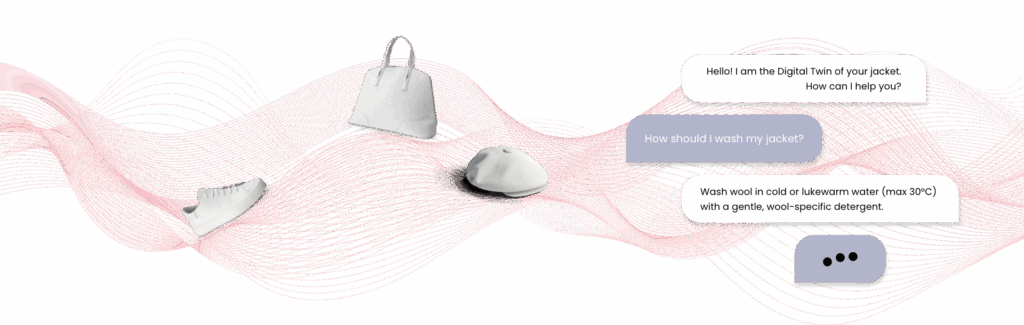
Visual commerce is a set of interactive visual technologies — navigable 3D models, augmented reality (AR), Virtual Try-On (VTO), real-time configurators, and digital twins — integrated across the entire purchase journey, from first contact to checkout and into post-purchase. The visual commerce platform market is estimated at $2.5 billion in 2024, potentially reaching $6.8 billion by 2033.
The key shift is cultural: we no longer "show" a product — we stage and build a process the customer can inhabit. They rotate, try on, change finishes, compare; they point their camera to see how it looks at home or on themselves.
1. What Visual Commerce Is — and Why It Has Become the New Standard
Visual Commerce is not a single technology — it's an ecosystem that covers the full range of immersive shopping tools. Each element solves a different part of the purchase uncertainty problem:
2. Measurable Efficiency: Fewer Returns, Less Waste, More Value
Visual Commerce isn't a mere "special effect" — it has measurable operational impact. If customers can better understand products before purchase, they are far less likely to return them. VTO, 3D, and AR reduce uncertainty: colors, proportions, fit, and combinations stop being guesswork.
Shopify case studies show +40% in orders converted and –5% return rate after 3D/AR integration. Deloitte confirms that 3D product views can cut returns by up to 40%.
Moreover, within the EU framework, clearly personalized goods fall under exceptions to the right of withdrawal (Art. 16, Dir. 2011/83/EU) — a structural operational advantage for Made-to-Order brands that connect visual commerce to production.
The cost of not investing
- High return rates eating into margins
- Cart abandonment at 70%+ (Baymard)
- Static images failing to convey fit, material, proportion
- Lost trust at the final stage of the funnel
The return on investment
- +40% orders converted after 3D/AR integration
- –5% return rate with visual commerce
- 74% of users prefer to purchase after 3D view
- +40% purchase intent with customization
3. Tailoor: The Platform That Orchestrates the Full Experience
Tailoor isn't a simple plug-in — it's a phygital, AI-powered platform that integrates visualization, personalization, and end-to-end management: from the 3D configurator to Virtual Try-On, from the Digital Twin of the Customer to the AI Assistant, through to the CRM and Business Intelligence dashboard.
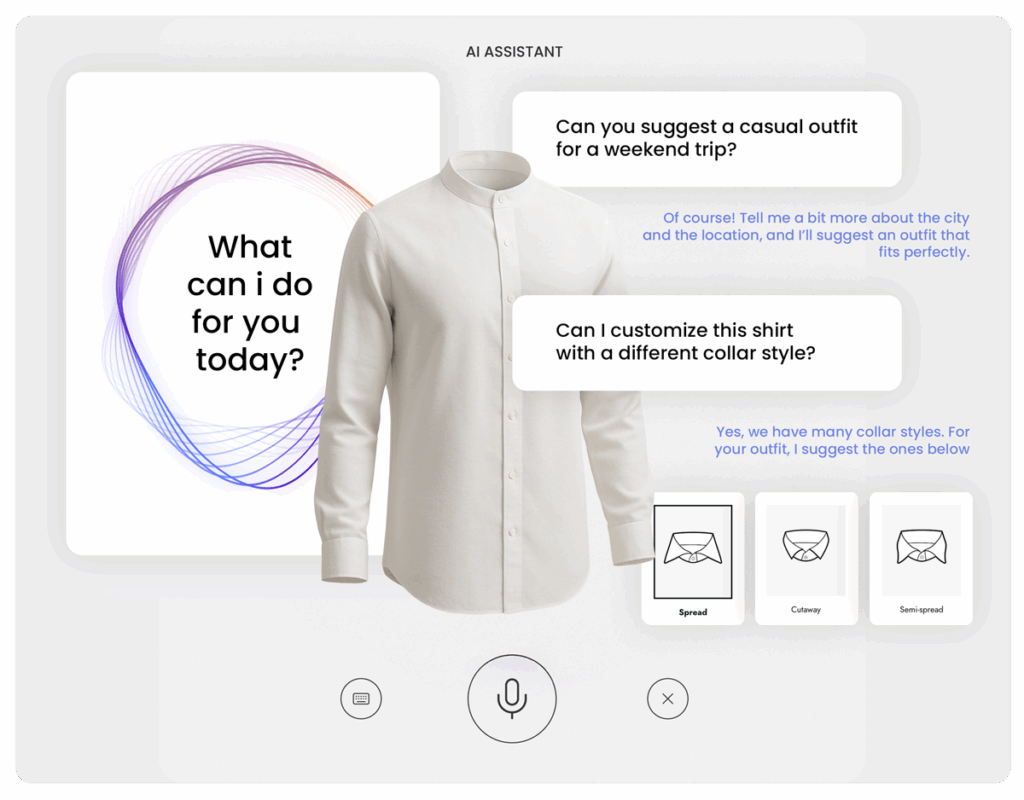
The full Tailoor platform
› AI 3D Configurator — photorealistic real-time configuration for any product category
› Virtual Try-On — garments and accessories on personalized avatars or customer photos
› Digital Twin of the Customer — persistent representation for smarter personalization
› AI Sales Assistant — guided configuration online and in-store
› CRM & Business Intelligence — configuration data becomes business strategy
› Made-to-Order production — produce only what's sold, eliminate waste
4. Use Cases: Where 3D, AR & VTO Create the Most Value
🧥 Fashion & Apparel
VTO and 3D reduce the most expensive category of returns — size and fit mismatches. For made-to-order garments, visual confirmation before production eliminates physical samples.
💎 Jewelry & Luxury
3D configuration makes metals, stones, and settings visible before production — transforming abstract choices into concrete, trusted decisions with photorealistic quality.
🛋 Design & Furniture
AR lets customers visualize furniture in their actual space. 3D configuration handles hundreds of modular variants and connects choices directly to production BOMs.
⚽ Sport & Teamwear
Phygital experiences let athletes, fans, and teams co-design products with made-to-order fulfillment — from performance footwear to club merchandise.
🏭 B2B Manufacturing
Complex product configuration for manufacturers and distributors — buyers explore thousands of variants without physical samples, with auto-generated quotes and ERP integration.
🏪 Omnichannel Retail
A shared touchpoint where a customer starts a design at home and completes it with an in-store advisor. The configurator becomes a bridge between digital and physical.
5. Tailoor vs. Traditional Visual Tools: A Comparison
| Capability | Static photos + video | Generic 3D tools | Tailoor platform |
|---|---|---|---|
| Photorealistic real-time rendering | ✗ | Partial | ✓ |
| Virtual Try-On on avatar/photo | ✗ | ✗ | ✓ |
| Made-to-Order production link | ✗ | ✗ | ✓ |
| AI-driven configuration rules | ✗ | ✗ | ✓ |
| Digital Twin of Customer | ✗ | ✗ | ✓ |
| CRM & BI dashboard | ✗ | ✗ | ✓ |
| Omnichannel (online + in-store) | Partial | Partial | ✓ |
6. KPIs: The Business Case for 3D, AR & VTO
5 Reasons to Choose Tailoor
- Photorealistic rendering: Materials and micro-details visualized with professional quality across all categories
- AI Configurator: Complex production rules and constraints built in — only feasible configurations are shown
- Enterprise scalability: Articulated variants, multi-category SKUs, international markets
- Full phygital integration: Online, in-store, and everywhere in between — one seamless journey
- End-to-end: From 3D → VTO → Digital Twin → Made-to-Order → CRM in a single platform
Frequently Asked Questions
Tailoor is not an alternative to existing tools — it is the platform that connects all of them into a single, coherent customer experience. From desire to concrete project, from project to data, from data to informed decisions.