
How to scale manual product personalization in e-commerce
Every fashion founder offering customized products reaches the same moment: orders are coming in, customers love the idea, but the team is drowning. One more custom request means one more email thread, one more spreadsheet row, one more manual render, one more call with production. The business that felt exciting at 20 orders a week becomes operationally unsustainable at 200.
This is the manual personalization ceiling — and breaking through it is not about hiring more people. It is about rebuilding the personalization workflow from the ground up around configurators, automated order flows, and made-to-order production logic.
This guide explains exactly why manual personalization breaks, when it breaks, and what the path to scalable, profitable customization looks like for fashion and accessories brands.
1. Why Manual Personalization Doesn't Scale
Manual product personalization works — until it doesn't. The workflow feels manageable when orders are few: a customer emails their preferences, someone on the team translates those preferences into a render, production gets a handwritten spec, the customer approves, and the item ships. It's personal. It feels premium.
But every step in this process is a linear cost. Double the orders, double the emails. Double the orders, double the render time. Double the orders, double the production errors caused by miscommunication. The economics of manual personalization are fundamentally broken at scale — not because of effort, but because of structure.
⚠️ The manual personalization ceiling
Most fashion brands hit a hard operational wall between 30 and 100 custom orders per week. Above this threshold, error rates spike, delivery times stretch, team morale drops, and customer satisfaction collapses — precisely when the business should be accelerating.
The specific failure modes are consistent across brands:
Operational failures
- Configuration errors passed to production increase with volume
- Order tracking becomes a full-time job across emails and spreadsheets
- Production receives ambiguous or incomplete specs
- Last-minute changes cascade through the entire workflow
- Returns and remakes consume margin and team time
Customer experience failures
- Customers wait days for confirmation of what their product will look like
- Approval loops extend delivery timelines unpredictably
- Inconsistent communication creates anxiety before high-value purchases
- Final product doesn't match the customer's mental image — leading to returns
- Premium positioning erodes when the process feels clunky
Manual personalization is not a personalization strategy — it is a temporary workaround that feels like a strategy. It works at the start because the founder's attention compensates for the lack of systems. It fails when attention can no longer scale.
2. The Four Stages of Personalization Maturity
Most fashion e-commerce brands move through four recognizable stages as their personalization operation evolves. Understanding where you are determines what you need to fix next.
The goal is Stage 4. Most brands are stuck at Stage 1 or 2 — and the gap between where they are and where they need to be is larger than it looks, because Stage 3 is a trap: it feels like progress while the core operational problem (manual production handoff) remains unsolved.
3. What Scalable Personalization Actually Requires
Moving from manual to scalable personalization is not simply a matter of adding a configurator to your website. It requires rethinking four interconnected systems that must work together:
Without all four systems working together, you have partial automation — which reduces some manual load but doesn't eliminate the fundamental scaling problem. The manual work simply moves to a different point in the process.
4. The Role of the Product Configurator
A product configurator is the front-end layer of scalable personalization — the interface through which a customer makes their choices and sees the result in real time. But not all configurators are equal, and choosing the wrong one perpetuates rather than solves the scaling problem.
A configurator that only collects preferences and shows a static preview is a digital version of the email workflow. The order still requires manual handling downstream. A configurator that enforces producibility rules, generates photorealistic visualization, and connects directly to production is a fundamentally different system.
✗ Basic configurator (Stage 3)
- Collects customer preferences via dropdowns
- Shows a static preview image
- Generates a PDF or email summary for the team
- Team manually reviews and translates to production specs
- No rules preventing non-producible combinations
- Customer still waits for confirmation
✓ AI configurator (Stage 4)
- Enforces production constraints in real time
- Shows photorealistic rendering of the exact product
- Auto-generates technical files and BOM for production
- Connects directly to ERP/CAD/production systems
- Only shows combinations that can actually be made
- Customer sees and confirms the final product instantly
The configurator is not just a UX tool — it is the operational backbone of a scalable personalization business. The moment it generates production-ready data automatically, the manual overhead of custom orders approaches zero.
5. Made-to-Order: The Production Model That Makes Personalization Profitable
Scalable personalization and made-to-order production are inseparable. Made-to-order means producing an item only after it is sold and configured — eliminating the overstock risk that makes traditional fashion so capital-intensive and waste-generating.
For brands offering personalized products, made-to-order is not just an environmental or financial preference — it is the only production model that makes economic sense. Holding inventory of pre-made personalized items is impossible. Producing to forecast for a product that varies by customer is equally unworkable. The only viable model is: customer configures → production begins → item ships.
When connected to an automated configurator, made-to-order production also has a critical legal advantage in the European Union: personalized goods under Art. 16 of EU Directive 2011/83/EU fall outside the standard right of withdrawal — meaning returns on custom items are not automatically the brand's liability. This structurally reduces one of the largest cost drivers in fashion e-commerce.
6. The Real Costs of Manual Personalization at Scale
Brands that stay in manual personalization often underestimate the true cost because it hides in overhead, team time, and opportunity cost rather than appearing as a single line item. A realistic accounting of manual personalization costs includes:
Direct costs
- Time per order: 45–120 minutes of human handling for each custom request
- Error-driven remakes: typically 5–15% of custom orders require remake or correction
- Return processing: handling, quality control, restocking, potential discounting
- Customer service: emails, calls, and approval rounds per order
- Design and rendering: custom previews for each configuration
Indirect costs
- Delayed delivery: manual workflows extend lead times, reducing customer satisfaction
- Scaling headcount: the only way to grow is hiring more people for the same manual tasks
- Founder attention: executive time consumed by operational firefighting
- Missed orders: customers who want personalization but abandon due to friction
- Brand perception: a clunky process undermines premium positioning
What automation eliminates
- Manual order processing time: From 45–120 minutes per order to near zero with automated configuration-to-production flow
- Configuration errors: Production constraints enforced at configuration time prevent impossible or non-producible orders from being placed
- Approval loops: Photorealistic visualization gives customers certainty at configuration time — no back-and-forth required
- Remake costs: Accurate pre-purchase visualization reduces the gap between expectation and reality
- Headcount scaling: Order volume growth no longer requires proportional headcount growth
7. User Experience and Delivery Times: The Customer-Facing Impact
The operational improvements of automated personalization have a direct mirror in the customer experience. What the brand experiences as fewer errors and less overhead, the customer experiences as faster delivery, more confidence, and a better premium feel.
In a market where 71% of consumers expect personalized interactions and 76% get frustrated when those expectations aren't met (McKinsey), the quality of the personalization experience is itself a conversion and loyalty driver — not just a cost center.

8. How Tailoor Makes Personalization Scalable
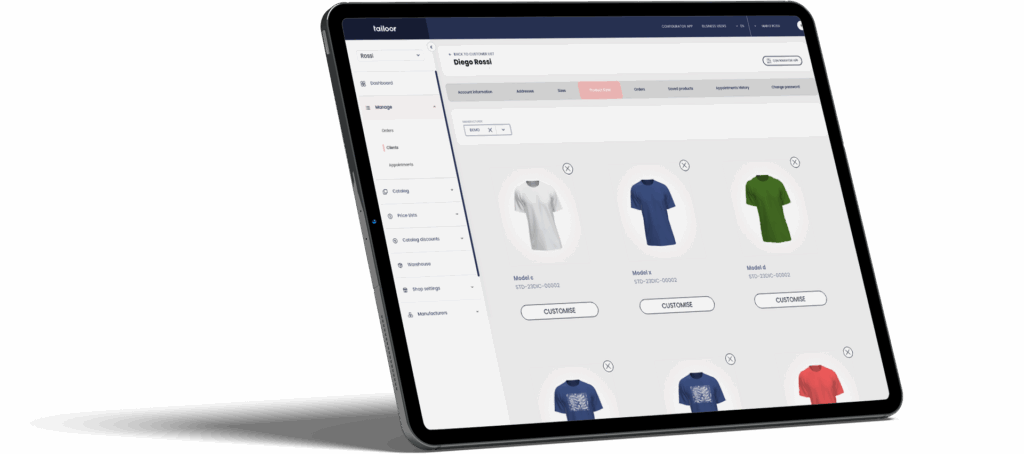
Tailoor is an AI-powered platform built specifically to solve the manual personalization scaling problem for fashion, accessories, and luxury brands. It connects customer-facing 3D configuration directly to made-to-order production — with no manual intervention between the customer's choice and the factory floor.
The Tailoor stack for scalable personalization
› AI 3D Configurator — customers configure products in real time with photorealistic rendering; only producible configurations are shown
› Production constraints engine — rules defined by the brand prevent impossible combinations from ever reaching production
› Automatic technical file generation — BOM, technical specs, and production data generated automatically at order confirmation
› ERP / CAD / PLM integration — configuration data flows directly into existing production systems, no manual translation
› Virtual Try-On — customers visualize garments and accessories on their own image before purchasing, reducing returns
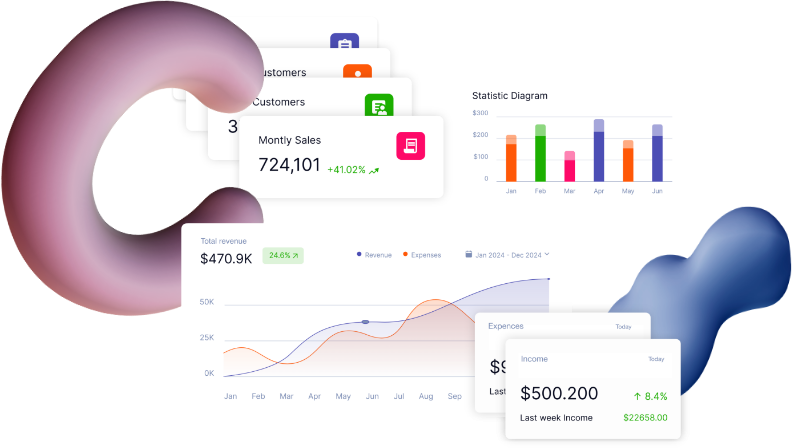
› CRM & BI dashboard — every configuration is a data point: most-requested combinations, highest-AOV materials, conversion by variant
The result is a made-to-order operation that scales with order volume, not with headcount. The same team can process 10 custom orders or 10,000 — because the system handles the operational complexity that previously required human intervention at every step.
Tailoor doesn't just replace the manual workflow — it makes the manual workflow impossible to go back to. Once every configuration generates a production-ready order automatically, the idea of managing custom orders by email feels like sending faxes.
9. How to Know You're Ready to Scale Personalization
Not every brand needs a full automated personalization stack on day one. But there are clear signals that the manual ceiling is approaching and that investing in automation will pay back faster than the cost of staying manual:
- You are spending more than 30 minutes of team time per custom order
- Your production error rate on custom items is above 3–5%
- Customers are asking for custom options you can't efficiently offer
- Your delivery times on custom orders are longer than your standard products
- You've declined custom orders because the operational overhead wasn't worth it
- Customer service time is dominated by status updates and approval rounds
- You're hesitant to run promotions on custom products because you can't absorb the volume
If three or more of these apply, the ROI on automation is almost certainly positive — and the longer you wait, the more revenue and margin is lost to operational friction.
Frequently Asked Questions
Manual personalization is a beginning, not a strategy. The brands that win in custom e-commerce are those that build the systems to make personalization feel effortless — for the customer and for the team behind the scenes.