
The Future Trains Here: When Sport Becomes a Phygital Experience
Today, sport is no longer just about movement or results — it has become a true language, a shared experiential narrative. Performance is no longer measured only in seconds or kilometers but also in the ability to build a connection with those who train, watch, and ultimately buy. In this scenario, technology becomes a new muscle in the body of sport, and visual commerce is its most evolved expression.
Images alone are no longer enough. In the world of sport, this means being able to experience the product before even wearing it: exploring its technical materials, visualizing the grip of a racket or the traction of a shoe, testing a garment in virtual training conditions.
The global AR market for e-commerce reached $5.88 billion in 2024 and is expected to grow to $38.5 billion by 2030. In the European sports sector, almost a third of clothing and equipment sales now take place online.
1. From the Field to the Screen: The New Arena
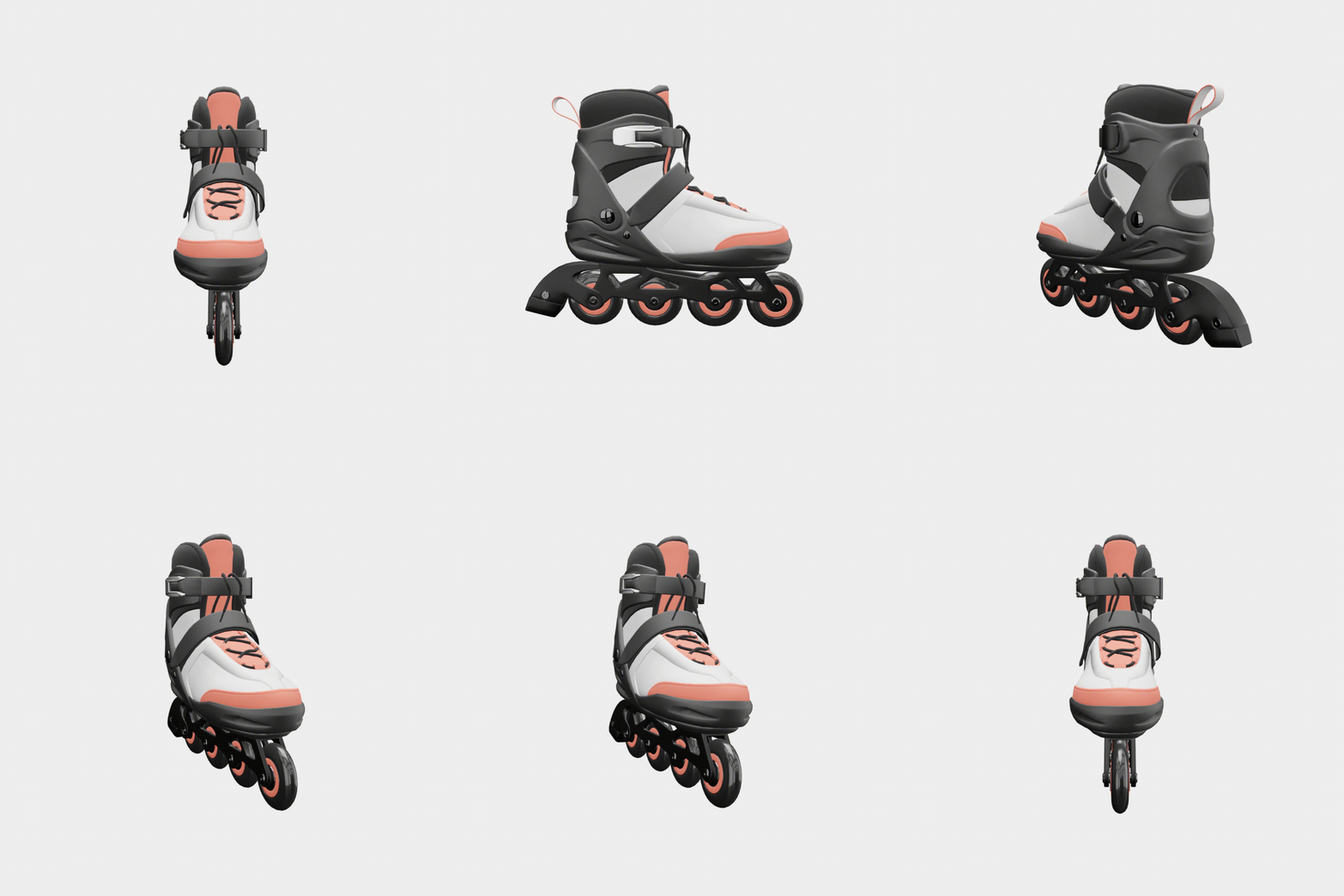
Modern sports experience is increasingly phygital: the athletic gesture extends from the real field to the digital space, where configurators, 3D environments, and augmented reality allow users to create and test products in real time. The mobile AR market, valued at over $23 billion in 2024, is expected to grow by 31% annually through 2034.
2. Intelligence That Personalizes: Sport & Technology
Even in sport, personalization has become an integral part of performance. Nike experiments with 3D configurators for running and football shoes through its Nike By You program — allowing users to model materials and colors based on their playing style. Adidas and ASICS are testing AR try-on solutions for footwear preview in virtual environments before purchase.
Tailoor intercepts and amplifies this transformation, scaling it across platforms. Its AI-powered system merges the realism of 3D configurators with the predictive power of data, turning sports e-commerce into a visual and participatory design lab. The customer is no longer a passive buyer but an active participant in the creation process.
While many digital experiences stop at rendering, Tailoor integrates the entire cycle — from idea to Made-to-Order production — eliminating waste and shortening the distance between inspiration and realization. Decathlon has already begun a transition toward on-demand production of personalized sports equipment, and Manchester City offers phygital and metaverse experiences with customizable merchandise.
3. Case Study: Tailoor × Parma Calcio 1913
Case Study — Sport
When E-Commerce Becomes Experience
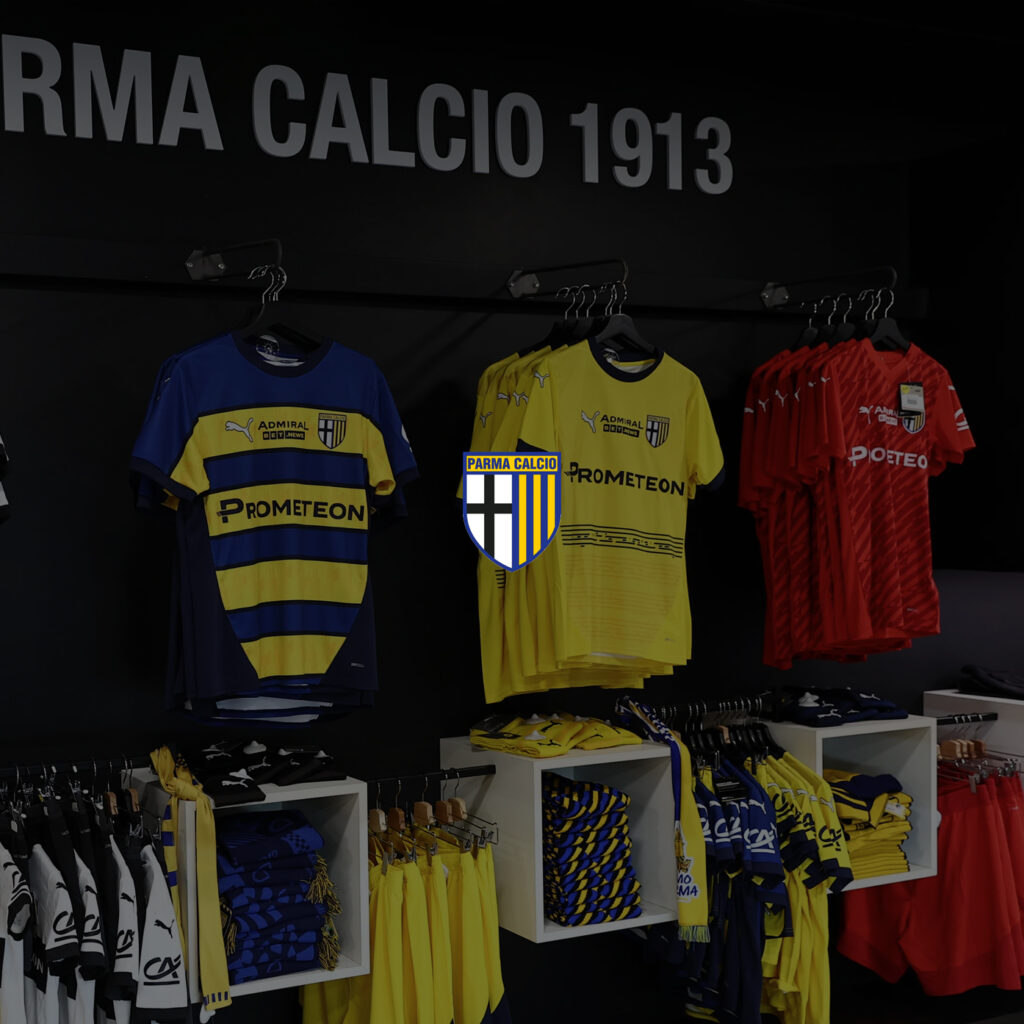
Tailoor's collaboration with Parma Calcio 1913 led to the creation of the club's new official e-commerce platform — an interactive 3D environment where supporters personalize official products, explore jerseys, merchandise, and accessories, and enjoy an immersive shopping journey consistent with the club's identity.
The store was named among the finalists at the Netcomm Award 2025 as a best practice in the sports industry — combining technology, storytelling, and a unique user experience.
4. The Fan Journey: From Spectator to Co-Creator
The revolution introduced by Tailoor is not merely technological — it represents a cultural shift. It overturns the logic of the shop window and places the relationship, the gesture, and creativity at the center. E-commerce becomes a visual gym, where users are designers, testers, and storytellers of their own products.

5. Operational Impact: From Fan Experience to Production
5 Measurable Benefits
- +28% Revenue from Customized Items: Proven result from Tailoor × Parma Calcio deployment
- Increased Conversion: 3D and AR content increases conversion by up to +94% vs static
- Stronger Fan Engagement: Personalized experiences deepen club and brand loyalty
- Return Reduction: Better pre-purchase visualization reduces size and expectation mismatches
- Made-to-Order Alignment: Produce only what's sold — eliminate overstock and end-of-season waste
6. KPIs: Why Phygital Sport Commerce Works
Innovation as culture
In the contemporary sports ecosystem, value no longer lies solely in performance — it lies in participation. Athletes, fans, and brands now share the same digital space, co-designing and imagining together. Tailoor is the engine that trains creativity, combining technological precision with human sensitivity. Because the real revolution is no longer in how we run — but in how we choose to design our own race.
Frequently Asked Questions
The real revolution is no longer in how we run — but in how we choose to design our own race. Tailoor is the engine that trains creativity.