
What features a fashion 3D Product Configurator must have
published on
Must-Have Features for a High-Converting 3D Fashion Configurator
The fashion industry is experiencing a digital transformation that’s reshaping how brands engage with customers. At the heart of this revolution lies the fashion product configurator, a powerful tool that bridges the gap between online shopping and the tactile experience of traditional retail. As consumer expectations evolve, understanding which fashion 3D product configurator features are essential has become critical for brands looking to stay competitive.
A product configurator allows customers to personalize and customize fashion items in real-time, creating a unique shopping experience that drives engagement, reduces returns, and increases conversion rates. But not all configurators are created equal. The difference between a basic customization tool and a truly effective configurator lies in its features and capabilities.
In this comprehensive guide, we’ll explore the must-have features that make a fashion 3D product configurator successful, examine cutting-edge technologies like 3D visualization and AI, and provide a practical checklist to help you evaluate 3D configurator solutions for your brand.
Why Fashion 3D Product Configurators Matter
Before diving into specific features, it’s important to understand why configurators have become indispensable for modern fashion brands. Today’s consumers demand personalization, transparency, and convenience. They want to see exactly what they’re buying before committing to a purchase, especially when shopping online where they can’t physically touch or try on products.
Fashion 3D product configurators address these needs by enabling customers to:
- Visualize products with different colors, fabrics, and design elements
- Make informed decisions with realistic product representations
- Express their individual style through customization
- Reduce purchase anxiety by seeing exactly what they’ll receive
For brands, 3D configurators offer significant business benefits including higher average order values, reduced return rates, improved customer satisfaction, and valuable data insights into customer preferences
Must-Have Core Features
Real-Time Visual Updates
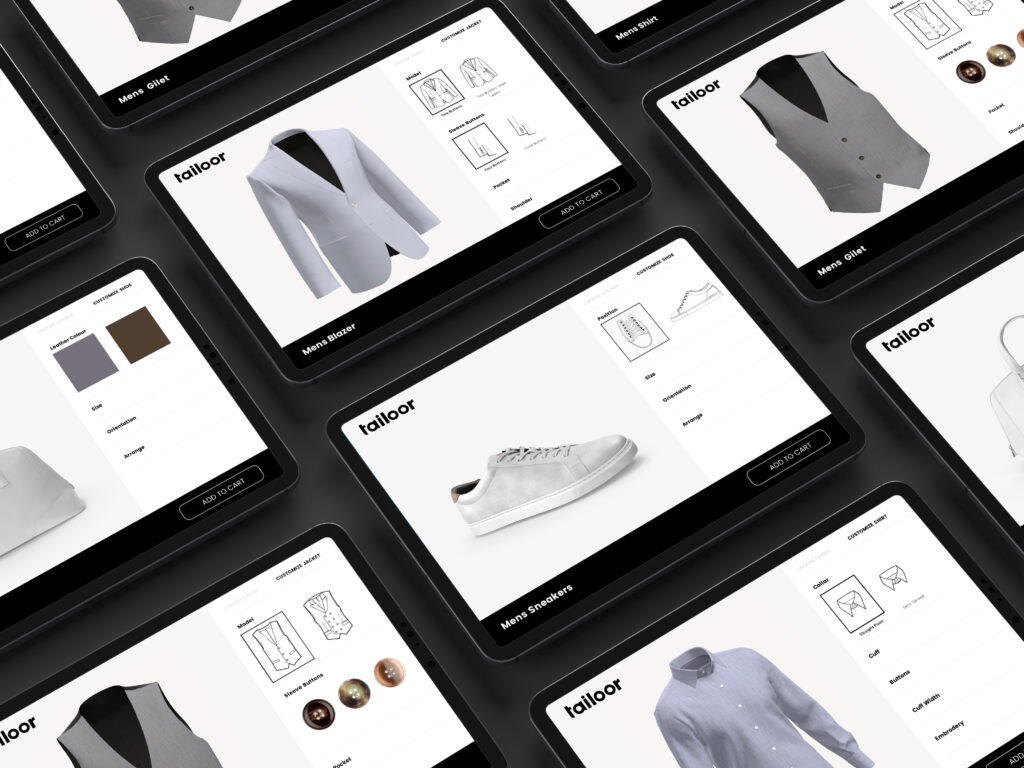
The foundation of any effective fashion product configurator is instant visual feedback. When a customer selects a different fabric, color, or design element, the product visualization must update immediately and accurately. This real-time rendering creates an engaging, interactive experience that keeps customers exploring options.
The visual updates should be seamless, with no lag or loading delays that could frustrate users and lead to cart abandonment. High-quality rendering ensures that what customers see on screen closely matches the final product they’ll receive, building trust and confidence in their purchase decision.
Comprehensive Fabric and Material Options
Fabric variants are crucial for fashion configurators. Customers need to see how different materials affect the product’s appearance, drape, and overall aesthetic. A robust configurator should support multiple fabric types, each rendered with accurate texture, sheen, and weight characteristics.
Beyond basic color swatches, advanced configurators display realistic fabric properties including weave patterns, surface textures, and how light interacts with different materials. This level of detail is particularly important for premium fashion brands where material quality is a key differentiator. .
Intuitive User Interface
Even the most feature-rich configurator fails if customers can’t navigate it easily. The interface should be clean, intuitive, and accessible to users of all technical skill levels. Clear labeling, logical organization of options, and helpful tooltips guide customers through the customization process without overwhelming them.
Mobile responsiveness is non-negotiable. With the majority of online shopping now happening on mobile devices, your configurator must function flawlessly across all screen sizes and platforms. Touch-friendly controls, optimized loading times, and simplified navigation for smaller screens ensure a consistent experience regardless of how customers access your site.
Price Transparency
Customers need to understand how their choices affect the final price. Dynamic pricing that updates in real-time as customization options are selected eliminates surprises at checkout and builds trust. Clear breakdowns showing base price, customization costs, and total price help customers make informed decisions within their budget.
Advanced Technology Features
3D Customization and Visualization
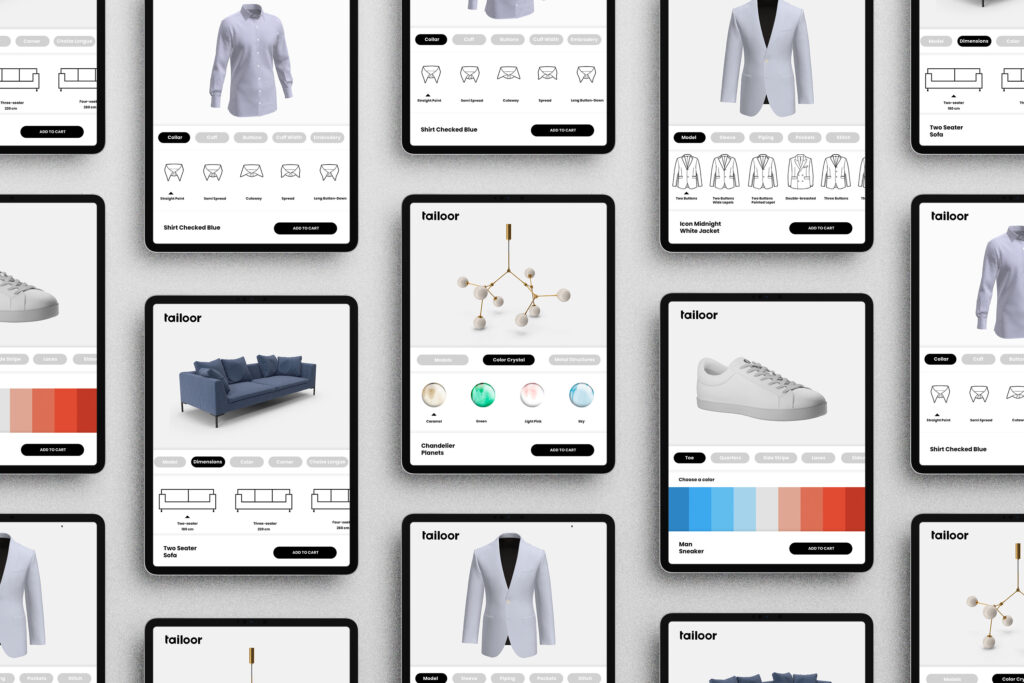
3D customization represents the cutting edge of product configurators. Unlike flat, 2D images, 3D models allow customers to rotate, zoom, and examine products from every angle. This comprehensive view replicates the in-store experience where customers can pick up and inspect items before purchasing.
Three-dimensional rendering provides depth, shadow, and realistic proportions that 2D images simply cannot match. Customers can see how design elements work together, understand the product’s structure, and appreciate details that might be invisible in traditional product photography.
For fashion brands, Tailoor’s AI-powered 3D configurator exemplifies this technology, enabling customers to create truly personalized products with photorealistic visualization.
Virtual Try-On Capabilities
Virtual try-on technology takes product visualization to the next level by allowing customers to see how items look on themselves or on realistic avatars. Using augmented reality (AR) or AI-powered body mapping, virtual try-on reduces the guesswork from online fashion shopping.
This feature is particularly valuable for items where fit and proportion are critical, clothing, eyewear, jewelry, and accessories. Customers can upload their photo or use their device’s camera to see products on their own body, in their own environment, making the online shopping experience more personal and accurate.
Virtual try-on significantly reduces return rates by helping customers choose the right size and style the first time. It also increases customer confidence and purchase intent by eliminating the uncertainty that often accompanies online fashion purchases.
AI-Powered Guided Selling
Artificial intelligence transforms configurators from simple customization tools into intelligent shopping assistants. Guided selling uses AI algorithms to recommend options based on customer preferences, previous purchases, and trending styles.
Smart recommendations help customers navigate extensive customization options without feeling overwhelmed. The AI can suggest complementary colors, popular fabric combinations, or design elements that work well together based on data from thousands of previous configurations.
AI-powered features can also include style quizzes that help customers discover their preferences, automated size recommendations based on body measurements, and predictive personalization that anticipates what customers might like before they even start customizing.
High-Quality Product Rendering
The quality of your product visualization directly impacts conversion rates. Professional-grade rendering engines create photorealistic images that accurately represent materials, colors, and finishes. Advanced lighting simulations show how products appear in different environments and conditions.
Ray tracing, physically-based rendering (PBR), and high-resolution textures ensure that the configured product looks as close to the real item as possible. This level of quality is essential for luxury and premium fashion brands where customers expect excellence in every interaction.
Integration and Technical Features
Seamless E-commerce Integration
A configurator must integrate smoothly with your existing e-commerce platform. Whether you use Shopify, WooCommerce, Magento, or a custom solution, the configurator should work as a natural extension of your site, not a disconnected tool.
Proper integration ensures that configured products flow seamlessly into shopping carts, order management systems, and production workflows. Customer data, pricing, and inventory levels should sync automatically, preventing errors and streamlining operations.
Production-Ready Outputs
The configurator should generate production-ready specifications automatically. When a customer completes their configuration, the system should create detailed manufacturing instructions, including materials, measurements, colors, and any special requirements.
These outputs might include technical drawings, cut files, material lists, and assembly instructions that your production team can use immediately. Automation reduces errors, speeds up production, and ensures that what customers designed is exactly what they receive.
Save and Share Functionality
Customers appreciate the ability to save configurations and return to them later. This feature accommodates the reality that many purchase decisions, especially for customized products, require time and consideration. Saved configurations can be accessed from any device, allowing customers to share designs with friends or family for feedback.
Social sharing features extend your brand’s reach by turning configured products into shareable content. When customers post their unique designs on social media, they’re essentially creating free marketing for your brand while expressing their creativity.
Analytics and Business Intelligence
Customer Behavior Tracking
A sophisticated configurator captures valuable data about customer preferences and behavior. Analytics reveal which options are most popular, where customers spend the most time, and at what point they abandon the configuration process. These insights inform product development, marketing strategies, and inventory planning. Understanding what customers want helps brands make data-driven decisions rather than relying on
assumptions.
A/B Testing Capabilities
The ability to test different configurator layouts, option presentations, and user flows helps optimize conversion rates. A/B testing reveals which approaches work best for your specific audience, allowing continuous improvement of the configurator experience.
Essential Checklist for Fashion 3D Product Configurators
When evaluating configurator solutions, use this checklist to ensure you’re getting the features you need:
Core Functionality:
- Real-time visual updates with no lag
- Comprehensive material and color options
- Mobile-responsive design
- Dynamic pricing display
- Intuitive, user-friendly interface
Advanced Features:
- 3D product visualization with 360° rotation
- Virtual try-on capabilities
- AI-powered recommendations and guided selling
- Photorealistic rendering quality
- Augmented reality support
Technical Requirements:
- Seamless e-commerce platform integration
- Production-ready output generation
- Save and share functionality
- Fast loading times (< 3 seconds)
- Cross-browser compatibility
Business Intelligence:
- Customer behavior analytics
- Popular configuration tracking
- Conversion funnel analysis
- A/B testing capabilities
- ROI measurement tools
Support and Scalability:
- Reliable technical support
- Regular updates and improvements
- Ability to handle high traffic volumes
- API access for custom integrations
- Multi-language support if needed
Implementing Your Configurator Strategy
Choosing the right fashion 3D product configurator is just the first step. Successful implementation requires understanding your specific business needs, customer preferences, and technical capabilities. Consider starting with core features and gradually adding advanced capabilities as you learn what resonates with your audience.
Many fashion brands benefit from working with specialized solutions providers who understand the unique challenges of the fashion industry and can customize configurators to match brand identity and business processes.
The right configurator, equipped with must-have features like real-time 3D visualization, virtual try-on, AI-powered guidance, and seamless integration, transforms the online shopping experience from transactional to experiential.
By prioritizing fashion product configurator features that align with your brand values and customer expectations, you create engaging, personalized shopping experiences that drive conversions, reduce returns, and build lasting customer relationships. The investment in a comprehensive configurator pays dividends through increased sales, improved customer satisfaction, and valuable insights into consumer preferences.
Ready to transform your fashion brand with a cutting-edge product configurator? Book a call with Tailoor to discover how our AI-powered solutions can elevate your customer experience and drive measurable business results.